
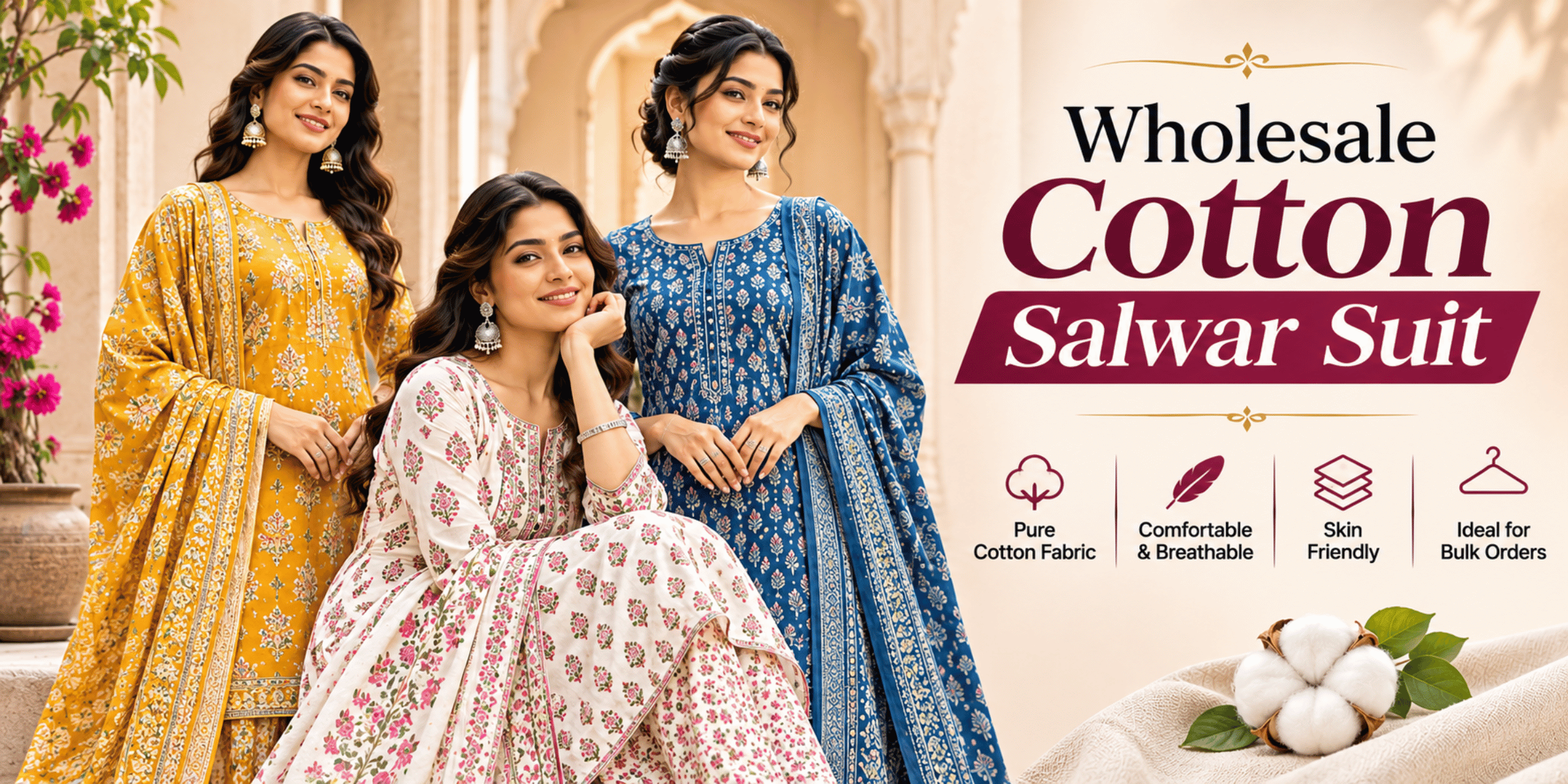
Cotton ethnic wear continues to attract customers who value comfort, breathability, versatility, and traditional styling. For boutiques, clothing retailers, and international fashion wholesalers, a Wholesale Cotton Salwar Suit collection can be a useful addition to an everyday ethnic wear range. Fashionexport provides an online platform for businesses exploring Indian clothing and sourcing opportunities. Buyers can visit Fashionexport to learn more about the company and explore relevant fashion information. Businesses can also follow Fashionexport on Instagram for updates and fashion inspiration.
Cotton salwar suits combine traditional Indian clothing with practical everyday styling. They are suitable for different age groups, customer preferences, and occasions, depending on the fabric, design, colour, and overall construction. Some customers prefer simple cotton suits for daily use, while others look for printed, embroidered, or coordinated designs for office wear, casual gatherings, and festive occasions.
For international buyers, sourcing cotton salwar suits requires more than selecting attractive designs. Fabric composition, stitching quality, colour consistency, garment measurements, printing methods, packaging, and supplier communication all influence the final purchasing decision.
This guide explains the important aspects of cotton salwar suit sourcing, including popular styles, fabric varieties, design options, wholesale planning, and quality considerations. It is intended to help boutiques, retailers, importers, and distributors make informed decisions when exploring Indian ethnic wear.
A cotton salwar suit is a traditional outfit generally consisting of three coordinated components: a kameez or kurta, a salwar or bottom garment, and a dupatta. Depending on the design, the set may include two pieces or three pieces.
Cotton is widely used in everyday clothing because it is a natural fibre known for its softness and breathability. Its suitability for different garment constructions makes it a popular fabric choice for traditional and contemporary ethnic outfits.
A typical cotton salwar suit may include:
The overall appearance depends on the fabric, colour, print, embroidery, garment cut, and finishing details.
Cotton suits can be designed for everyday wear, office use, travel, casual occasions, and selected celebrations. Their versatility allows retailers to offer different collections at different price points.
Cotton salwar suits have an established place in the Indian ethnic clothing market. Their popularity is connected to practical features as well as traditional styling.
Cotton is commonly selected for clothing intended for frequent use. Its breathable nature makes it a practical option for customers who prefer comfortable outfits throughout the day.
Retailers can include lightweight cotton designs in collections intended for daily wear, casual outings, and regular activities.
Cotton suits can be styled in different ways. Customers may pair them with traditional footwear, sandals, flats, handbags, scarves, and simple jewellery.
The same basic outfit category can be presented through different designs, colours, and accessories, helping retailers appeal to different customer preferences.
Cotton ethnic wear is not restricted to one age category. Retailers can select simple prints and comfortable silhouettes for customers seeking understated designs, while offering more detailed patterns and contemporary cuts for younger shoppers.
Cotton fabrics can be used for printed, embroidered, woven, and minimally decorated outfits. This allows wholesalers and retailers to build collections with different visual styles.
Lightweight cotton outfits are often considered for spring and summer collections. Retailers can also select heavier cotton fabrics and layered styling for other seasons, depending on the target market.
For these reasons, a Wholesale Cotton Salwar Suit range can help retailers build a collection that combines traditional clothing with practical everyday fashion.
Cotton is available in different fabric constructions, weights, textures, and finishes. Buyers should understand these differences before selecting products for their retail market.
Pure cotton fabric is made from cotton fibres without blending them with other textile fibres. It is commonly selected for everyday clothing because of its natural feel and breathability.
Pure cotton salwar suits can be available in plain, printed, embroidered, and textured designs.
Buyers should confirm the actual fibre composition rather than relying only on product names or marketing descriptions.
Cambric cotton is a lightweight, closely woven cotton fabric. It is frequently used in garments where a smooth surface and relatively light construction are preferred.
It can be suitable for printed ethnic suits, casual outfits, and summer collections.
Mulmul is a lightweight and soft cotton fabric. It is often associated with comfortable clothing and delicate garment construction.
Its lightweight nature makes it an option for customers who prefer softer and lighter ethnic outfits.
Slub cotton has a slightly irregular texture created by variations in yarn thickness. This gives the fabric a distinctive appearance compared with a completely smooth cotton surface.
It can be used for casual ethnic suits and designs with a natural or textured look.
Handloom cotton refers to cotton fabric produced using hand-operated looms. Its appearance and texture can vary depending on the weaving technique, yarn, and production process.
Handloom-inspired clothing can appeal to customers interested in traditional textile aesthetics.
Cotton flex generally refers to cotton-based fabric with a linen-like appearance or texture. The exact composition can differ between suppliers, so buyers should request the fabric specifications.
Some salwar suits use cotton blended with other fibres. Blends may be selected to achieve particular texture, drape, durability, or maintenance characteristics.
Buyers should check the composition label and confirm whether the fabric is pure cotton or a blend.
The silhouette of a salwar suit has a significant influence on its overall appearance. Offering different styles can help retailers serve customers with varied preferences.
Straight-cut suits feature a relatively straight silhouette from the shoulders towards the hemline. They are commonly selected for everyday and office wear.
Their simple structure allows different prints, necklines, sleeve patterns, and dupatta combinations.
Anarkali suits have a flared silhouette that creates a flowing appearance. Cotton Anarkali designs may be suitable for casual gatherings, family occasions, and customers who prefer traditional styling.
The amount of flare, garment length, and fabric weight should be considered when evaluating these designs.
Punjabi-style suits are often associated with a kameez paired with a traditional salwar. The outfit can feature a relaxed silhouette and a coordinated dupatta.
Retailers may offer these designs in floral prints, geometric patterns, embroidered details, and classic colour combinations.
Palazzo suits combine a kurta or kameez with wide-legged trousers. This style offers a contemporary alternative to traditional salwar bottoms.
Cotton palazzo suits can be positioned as casual ethnic wear or comfortable everyday outfits.
Churidar suits feature fitted bottom garments with characteristic gathers around the ankles. They can be paired with different kurta lengths and silhouettes.
Buyers should pay attention to stretch, fit, and measurement accuracy when selecting churidar designs.
Patiala-style suits are known for their pleated and gathered bottom construction. They create a traditional appearance and can be paired with short or medium-length kameez designs.
Sharara suits feature flared bottom garments that create a distinctive traditional silhouette. Cotton versions can offer a more casual interpretation of this style.
Some modern collections replace the traditional salwar with straight pants or narrow trousers. These sets may appeal to customers looking for a combination of ethnic and contemporary styling.
A varied Wholesale Cotton Salwar Suit collection can include several silhouettes instead of relying on one design category.
Print selection plays an important role in the visual appeal of cotton ethnic wear. Different patterns can help retailers create collections for different customer groups.
Floral prints are commonly used in ethnic clothing. Small floral patterns can create a subtle everyday look, while larger floral designs can produce a more noticeable appearance.
Block printing is a traditional textile printing technique in which carved blocks are used to apply designs to fabric.
Printed patterns may include flowers, leaves, geometric shapes, traditional motifs, and repeating decorative elements.
Geometric prints feature lines, shapes, repeated patterns, and symmetrical designs. They can give cotton suits a contemporary appearance.
Paisley patterns are widely associated with traditional textile design. They can be used as small repeating motifs or larger decorative elements.
Abstract designs use artistic shapes, colour combinations, and irregular patterns. They may appeal to customers who prefer modern interpretations of ethnic clothing.
Stripes and checks provide a relatively simple visual style. They can be suitable for casual collections and customers who prefer less decorative clothing.
Traditional patterns may include floral elements, paisley-inspired designs, ornamental shapes, and regional textile influences.
When purchasing printed garments, buyers should check print alignment, colour consistency, fabric quality, and the appearance of the pattern across the garment.
Although printed cotton suits are popular in everyday collections, embroidery can add decorative value to cotton ethnic wear.
The amount and placement of embroidery should match the intended use of the garment.
Thread embroidery uses decorative stitching to create patterns on fabric. It can be applied to necklines, sleeves, borders, and front panels.
Machine embroidery is produced using embroidery machines. It can be used for repeating patterns and consistent decorative designs.
Hand embroidery involves decorative stitching performed manually. The final appearance depends on the embroidery technique, thread, artisan skill, and design complexity.
Mirror-work-inspired decoration uses small reflective elements within a decorative pattern. Buyers should check how securely the embellishments are attached.
Lace, piping, and decorative borders can add visual detail to cotton suits without requiring heavy embroidery.
Common embroidery placement areas include:
For everyday collections, buyers may prefer subtle embroidery. More decorative designs can be considered for special occasions and premium retail categories.
Colour selection can influence the appeal of an ethnic wear collection. Buyers should consider their target customers, seasonal requirements, and local fashion preferences.
Pastel shades such as powder blue, mint, peach, lavender, and soft pink can create a light and fresh appearance.
They may be suitable for summer-inspired and casual collections.
Beige, cream, white, grey, and other neutral shades can appeal to customers who prefer understated clothing.
These colours can also be combined with printed dupattas or contrasting accessories.
Colours such as yellow, pink, orange, turquoise, and green can create a lively collection.
Retailers may use these shades for casual, traditional, and seasonal clothing ranges.
Navy blue, maroon, bottle green, black, and deep purple can offer a more formal appearance.
They can be used for evening-inspired casual collections and selected festive designs.
Indian ethnic wear frequently uses contrasting colours and decorative combinations. Buyers may consider combinations such as red and cream, blue and white, green and pink, or mustard and maroon.
When ordering multiple pieces, buyers should confirm colour consistency between the approved sample and bulk production.
The neckline is one of the most noticeable design features of a kameez. It can influence the overall appearance even when the fabric and print remain the same.
Common neckline styles include:
Buyers should check neckline finishing, stitching, symmetry, and comfort when evaluating samples.
Sleeve design is another important feature that can help differentiate products within a cotton ethnic wear collection.
Full sleeves provide more coverage and can be used in traditional and contemporary designs.
Three-quarter sleeves are a common choice for everyday ethnic wear because they offer a balanced appearance.
Short sleeves can be suitable for lightweight summer collections and casual outfits.
Sleeveless kameez designs may appeal to customers looking for contemporary ethnic styling. Their suitability depends on the target market.
Bell sleeves widen towards the lower edge and add a decorative shape to the garment.
Cuffed sleeves include a finished band at the wrist or sleeve opening. They can create a more structured appearance.
Sleeves can also feature contrasting prints, lace, embroidery, or decorative borders.
When sourcing garments, buyers should check sleeve measurements and ensure that the design is comfortable and consistent across sizes.
Selecting the right collection requires an understanding of the customers who will purchase the garments.
A boutique serving customers interested in everyday ethnic clothing may prefer simple prints, lightweight fabrics, and practical silhouettes. A retailer targeting premium ethnic wear customers may consider embroidered details, coordinated dupattas, and more elaborate designs.
Before confirming a Wholesale Cotton Salwar Suit order, buyers should consider the following factors.
Identify the age group, style preferences, purchasing power, and clothing requirements of the intended customer.
Decide whether the collection is designed for daily wear, office wear, casual outings, travel, or festive occasions.
Confirm the actual fabric composition, weight, texture, and expected care requirements.
Choose a balanced mix of prints, colours, necklines, sleeve styles, and silhouettes.
Check whether the supplier can provide the required size range and consistent measurements.
Calculate the expected purchase cost and retail margin before selecting the collection.
Request clear photographs showing the front, back, fabric texture, print details, and included components.
A carefully selected collection can help retailers maintain variety while avoiding unnecessary inventory duplication.
Fabric quality is one of the most important considerations when sourcing cotton ethnic wear. Buyers should avoid making purchasing decisions based only on photographs or product names.
The following points can help during fabric evaluation.
Fabric Composition: Confirm whether the fabric is pure cotton or a cotton blend.
Fabric Weight: Check whether the fabric weight is appropriate for the intended garment and market.
Texture: Examine whether the surface feels consistent and matches the approved sample.
Colour Fastness: Ask about colour-fastness testing and suitable washing instructions.
Shrinkage: Cotton garments may shrink depending on fabric construction and finishing. Ask whether shrinkage testing has been performed.
Fabric Defects: Inspect for holes, stains, uneven weaving, and visible imperfections.
Print Quality: Check whether the print is clear, consistent, and properly aligned.
Transparency: Evaluate whether the fabric requires lining or an additional layer.
For international wholesale orders, requesting a physical sample is a useful way to evaluate fabric quality before confirming a larger purchase.
A product photograph can communicate a design, but it cannot always show the complete quality of a garment. Sample approval allows buyers to examine the actual product before committing to bulk quantities.
A sample inspection should include:
Buyers should keep the approved sample or documented specifications as a reference for bulk production.
If any changes are required, they should be communicated before production begins. This may include adjustments to garment length, sleeve measurements, neckline depth, fabric choice, print placement, or other design details.
Good stitching and construction contribute to garment durability and customer satisfaction.
When inspecting a cotton salwar suit, buyers should examine the seams, hems, neckline, sleeves, closures, and other construction details.
Important inspection points include:
The garment should also be checked for measurement consistency across the ordered size range.
For wholesale purchases, retailers should establish acceptable quality standards before placing an order. A written inspection checklist can help reduce misunderstandings during production and delivery.
Accurate sizing is important when selling clothing to international customers. Size labels can differ between suppliers and markets, so buyers should not assume that a medium or large size will have identical measurements across all collections.
A garment measurement chart may include:
| Measurement | What to check |
|---|---|
| Bust | Chest measurement of the kameez |
| Waist | Waist area measurement |
| Hip | Hip or lower-body measurement |
| Shoulder | Shoulder width |
| Sleeve length | Length from shoulder to sleeve edge |
| Armhole | Armhole measurement |
| Kurta length | Shoulder to bottom hem |
| Bottom length | Waist to bottom hem |
Buyers should confirm whether measurements are garment measurements or body measurements.
It is also important to check the measurement tolerance agreed with the supplier. Small variations may occur during garment production, but acceptable limits should be established in advance.
Inventory planning helps retailers select suitable quantities and reduce the risk of holding too much unsold stock.
A balanced collection can include:
Retailers should review their sales history and customer preferences before deciding quantities.
For a new collection, starting with a controlled selection of designs may help buyers understand demand before placing repeat orders.
Buyers should also consider whether they need multiple sizes and colour variations for each design. A collection with too many similar products may create unnecessary competition between items.
Fashionexport is an online business platform that buyers can explore when researching Indian clothing and wholesale fashion opportunities.
International retailers interested in cotton ethnic wear can visit https://fashionexport.in/ to explore relevant information about the website.
When evaluating any supplier or sourcing opportunity, buyers should confirm:
Fashionexport can also be followed on Instagram for fashion-related updates and visual inspiration.
The most effective sourcing decisions come from clear communication and verification of product specifications rather than assumptions based on photographs or general descriptions.
For wholesalers and international buyers, the most important step is to evaluate the actual product carefully. Fabric composition, stitching, measurements, colour consistency, sample approval, and supplier communication should all be considered before placing a bulk order.
A well-planned Wholesale Cotton Salwar Suit collection can help boutiques and clothing retailers offer a practical range of Indian ethnic wear. we will cover supplier selection, minimum order quantities, wholesale pricing, export documentation, international shipping, packaging, marketing, Instagram promotion, SEO, and frequently asked questions.
Choosing the right supplier is one of the most important decisions for boutiques, clothing retailers, wholesalers, and international importers. A reliable sourcing partner can help businesses maintain product consistency, understand garment specifications, and manage repeat orders.
When searching for a Wholesale Cotton Salwar Suit supplier, buyers should evaluate more than the product photographs and quoted prices. They should understand the supplier's actual product range, communication process, quality standards, and ability to fulfil the required order.
Consider these factors when evaluating a potential supplier.
Check whether the supplier offers the styles required for your target market. This may include printed cotton suits, straight-cut designs, Punjabi suits, Anarkali styles, palazzo sets, and embroidered cotton collections.
Ask for clear details about fabric composition, fabric weight, texture, and finishing. Confirm whether the material is pure cotton or a cotton blend.
Request clear photographs and physical samples wherever possible. Product images should show the garment from different angles and provide close-up views of prints, stitching, and decorative details.
A supplier should provide clear information about product specifications, prices, minimum order quantities, payment terms, and delivery schedules.
Understand how the supplier manages order confirmation, production, quality inspection, packaging, and dispatch.
Verify the supplier's business details and relevant registration information. For international transactions, discuss export documentation and payment arrangements before placing an order.
A structured supplier evaluation process can help buyers avoid misunderstandings and establish a more reliable sourcing relationship.
Minimum Order Quantity, commonly known as MOQ, refers to the minimum quantity a supplier requires a buyer to purchase in a single order or for a particular design.
MOQ policies vary between suppliers and products. Some suppliers may allow mixed designs, while others may require a minimum quantity for each style, colour, or size.
Before placing a Wholesale Cotton Salwar Suit order, buyers should clarify the following:
Smaller boutiques may prefer lower quantities because they want to test customer demand before investing in a large inventory.
Larger wholesalers and distributors may be comfortable purchasing higher quantities when they already have an established customer base.
The right order quantity depends on available capital, storage capacity, target market, expected sales, and supplier terms.
For a new retail collection, buyers can consider starting with a controlled selection of designs and sizes. After reviewing sales performance, they can identify which products deserve repeat orders.
This approach helps businesses avoid purchasing too many similar designs before understanding actual customer demand.
Wholesale prices can differ considerably depending on fabric quality, design complexity, construction, order quantity, and supplier terms.
Buyers should understand what is included in a quotation before comparing suppliers.
The fabric type, quality, weight, and quantity used in a garment can influence its price. Pure cotton, cambric, mulmul, slub cotton, and cotton blends may have different cost structures.
Printed designs may involve different processes and costs. The complexity of the print, number of colours, production method, and fabric treatment can affect pricing.
Hand embroidery, machine embroidery, lace, borders, and other embellishments may increase garment production costs.
The number of components, stitching requirements, garment length, lining, and finishing details can also affect the quotation.
Some suppliers may offer different pricing for different order quantities. Buyers should request a written quotation that clearly explains the quantity-based pricing structure.
Individual garment packaging, labels, tags, and bulk carton requirements may be included in the quoted price or charged separately.
For international buyers, shipping, customs handling, documentation, duties, and local delivery expenses must be considered separately where applicable.
A low product price does not always mean a low final purchasing cost. Buyers should compare the complete landed cost before making a decision.
Landed cost is the total expense involved in bringing products from the supplier to the buyer's intended destination.
For international clothing importers, this calculation is essential because shipping and import-related expenses can affect the final retail price.
The main components may include:
Suppose a retailer purchases 100 cotton salwar suits.
| Expense | Example amount |
|---|---|
| Product purchase cost | ₹50,000 |
| Packaging | ₹2,000 |
| Domestic transportation | ₹1,500 |
| International shipping | ₹12,000 |
| Other import-related costs | ₹9,500 |
| Total landed cost | ₹75,000 |
The example gives a landed cost of ₹750 per garment.
These figures are illustrative only. Actual expenses depend on the supplier, destination country, shipment weight, customs classification, applicable duties, and logistics arrangements.
Retailers should use the final landed cost when calculating their selling price and expected profit margin.
International clothing shipments require appropriate documentation. Buyers and suppliers should confirm the documents needed for the destination country before dispatch.
Common export and shipping documents may include the following.
The commercial invoice records the transaction details, including the seller, buyer, product description, quantity, unit price, and total value.
The packing list provides shipment information such as carton count, garment quantities, package dimensions, and gross and net weights.
The shipping bill is an important customs document used for exporting goods from India.
A certificate of origin identifies the country where the exported products originate. It may be required by the importing country or for specific trade arrangements.
A bill of lading is a transport document commonly used for sea freight shipments.
An airway bill is used for air cargo shipments and contains information about the shipment and its transportation.
An insurance certificate may be required when shipment insurance is arranged.
The exact documentation depends on the shipment, destination market, trade terms, and applicable regulations. Buyers should work with their supplier, freight forwarder, and customs broker to confirm requirements.
Choosing an appropriate shipping method helps businesses manage delivery timelines and transportation expenses.
International buyers sourcing Indian ethnic wear generally consider air freight, sea freight, and courier services.
Air freight is often considered for smaller commercial shipments, urgent orders, and collections that need faster transportation.
Advantages may include:
However, air freight can have a higher transportation cost per kilogram.
Sea freight is commonly considered for larger shipments and bulk wholesale orders.
Potential advantages include:
Buyers should plan for longer transit times and consider port handling, customs clearance, and inland transportation.
Courier services may be suitable for samples, small packages, and selected low-volume orders.
Before choosing a courier service, buyers should compare delivery coverage, tracking, customs handling, package limits, and total charges.
The right shipping method depends on shipment size, delivery deadline, destination, and budget.
Packaging helps protect garments during storage, transportation, and handling. Cotton fabrics can be affected by moisture, dust, pressure, and improper storage.
Buyers should discuss packaging requirements before confirming their orders.
Each suit may be packed separately to reduce dust exposure and make product handling easier.
Packaging labels can identify the design, size, colour, and other relevant product details.
Garments should be packed in clean, dry packaging suitable for the expected transportation conditions.
Outer cartons should be appropriate for the shipment weight and volume. They should protect the garments from unnecessary pressure and handling damage.
For international shipments, packaging should be suitable for the selected transportation method and the expected handling conditions.
Retailers who sell premium ethnic wear may also consider packaging that improves the product presentation when customers receive their orders.
A final inspection helps buyers check whether the finished garments meet the agreed specifications.
A quality inspection for cotton salwar suits should cover the following areas.
Fabric Verification: Confirm that the actual fabric matches the approved specifications.
Colour Inspection: Check for noticeable differences between the approved sample and finished garments.
Print Alignment: Inspect printed patterns for irregular placement, smudging, and unwanted defects.
Stitching: Examine seams, hems, sleeves, and neckline construction.
Measurement Checks: Compare garment measurements with the approved size chart.
Garment Components: Confirm that all required components, such as the bottom garment and dupatta, are included.
Finishing: Check for loose threads, stains, damaged fabric, and unfinished edges.
Packaging: Confirm that products are packed according to the agreed requirements.
For larger orders, buyers may arrange an independent inspection before shipment. The inspection criteria and acceptable defect limits should be agreed upon in advance.
Seasonal planning can help retailers select products that match customer preferences throughout the year.
Cotton clothing is frequently considered for warmer weather, but different fabric weights, prints, and silhouettes can be used in collections throughout multiple seasons.
Lightweight cotton fabrics, pastel shades, floral prints, and comfortable silhouettes can be considered for spring and summer ranges.
Simple printed suits, straight-cut designs, and practical styles can form the foundation of an everyday ethnic wear collection.
For festive periods, retailers may consider cotton suits with embroidery, decorative borders, coordinated dupattas, and richer colour combinations.
Comfortable cotton outfits with easy-to-style silhouettes may appeal to customers looking for practical clothing.
Customer preferences can vary between countries and regions. Retailers should study their local market before selecting colours, sizes, prints, and garment styles.
Rather than purchasing products based only on seasonal assumptions, businesses should use previous sales data and customer feedback to guide their decisions.
Marketing is important for helping customers discover new ethnic wear collections. Boutiques and clothing retailers can combine online and offline promotional methods to present their products effectively.
Use clear photographs that show the complete outfit, fabric texture, neckline, sleeves, print, and other important details.
Short videos can show garment movement, fabric appearance, and styling combinations.
Create product pages with accurate descriptions, fabric information, measurements, size availability, and care instructions.
Retailers can share new collection announcements, product updates, and seasonal offers with customers who have agreed to receive marketing communication.
Genuine customer feedback can help potential buyers understand product quality, fit, and overall satisfaction.
Platforms such as Instagram and Facebook can help retailers showcase collections and communicate with potential customers.
A consistent marketing approach can help businesses build recognition and encourage repeat purchases.
Instagram is a useful platform for visual fashion marketing. Boutiques, wholesalers, and clothing retailers can use it to showcase new designs and communicate with customers.
Fashionexport can also be followed on Instagram for fashion-related updates and inspiration.
Retailers can promote their cotton ethnic wear collections through different content formats.
Create short videos showing the front and back of the outfit, fabric texture, neckline details, and styling options.
Use multiple photographs to show different colours, prints, garment components, and close-up details.
Share new arrivals, collection previews, customer feedback, and product announcements.
Show how a cotton suit can be styled with footwear, bags, jewellery, and accessories.
Businesses targeting B2B buyers should clearly explain the wholesale enquiry process, available product information, and how interested retailers can contact them.
Good photographs, clear captions, and accurate product details can make fashion content more useful to potential buyers.
Search engine optimisation can help fashion businesses attract visitors who are looking for cotton ethnic wear, wholesale clothing, and Indian fashion suppliers.
A useful SEO strategy should combine keyword research, relevant product information, clear website structure, and helpful content.
Businesses can target search terms related to cotton suits, wholesale ethnic wear, Indian clothing suppliers, and cotton salwar suit collections.
The main phrase Wholesale Cotton Salwar Suit can be included naturally in relevant website content.
Product titles should explain the garment type and important features. For example, a title may include the fabric, design, and product category.
Product descriptions should provide accurate information about fabric composition, garment components, sizes, prints, and care instructions.
Use descriptive image filenames and meaningful alt text. Images should represent the actual product.
Educational articles can answer buyer questions about fabric selection, garment measurements, wholesale sourcing, and international shipping.
Link related blog posts and relevant product or category pages where they genuinely help visitors explore the website.
Fashion buyers frequently browse products on mobile devices. Websites should load efficiently and present product photographs and descriptions clearly on smaller screens.
Relevant structured data can help search engines understand product and article information. Product schema should only include accurate product details.
Fashionexport is an online fashion platform that businesses can explore when researching Indian clothing and wholesale fashion opportunities.
For boutiques, retailers, and international importers interested in cotton ethnic wear, the Fashionexport website provides a starting point for exploring relevant information.
Visit https://fashionexport.in/ to learn more about Fashionexport.
Before placing any commercial order, buyers should verify the actual products available, fabric specifications, quantities, prices, payment terms, delivery timelines, and shipping arrangements.
A good sourcing process should include clear communication, product verification, sample approval, and written confirmation of the order details.
Businesses can also follow Fashionexport on Instagram for fashion-related content and updates.
Wholesale buyers can reduce purchasing risks by paying attention to common sourcing mistakes.
A low quotation may not reflect the fabric quality, stitching standards, packaging, or final product specifications.
Compare suppliers based on overall value rather than price alone.
Some products may be described using general cotton-related terms without providing exact fibre composition.
Ask for clear fabric details before confirming an order.
A physical sample helps buyers assess fabric, measurements, colour, stitching, and finishing.
Avoid committing to a large quantity without understanding what the finished product will look like.
Size labels can vary between suppliers and markets. Always confirm actual garment measurements.
A collection with limited variety may not appeal to different customer groups.
Consider a balanced selection of prints, colours, and silhouettes.
International shipping, duties, taxes, and customs clearance can change the final purchase cost.
Calculate the expected landed cost before setting retail prices.
Production and shipping schedules should be discussed before an order is confirmed.
Buyers and suppliers should agree on acceptable fabric, stitching, measurement, colour, and finishing standards.
A wholesale cotton salwar suit is a cotton-based traditional outfit purchased in bulk quantities for resale through boutiques, retail stores, online fashion businesses, or distribution networks. It may include a kameez, salwar, and dupatta, depending on the product design.
Cotton salwar suits are popular because they combine traditional styling with a comfortable fabric option. They are available in different prints, colours, silhouettes, and decorative styles.
Pure cotton, cambric cotton, mulmul cotton, slub cotton, handloom cotton, and cotton blends may be used. The best choice depends on the intended garment, customer preference, and product specifications.
Lightweight cotton suits are commonly considered for summer collections because cotton is breathable. Buyers should also consider fabric weight, construction, and the climate of their target market.
Popular design categories include straight-cut suits, Anarkali suits, Punjabi suits, palazzo sets, Patiala suits, churidar suits, and printed cotton kurta sets.
Buyers should check fabric composition, print quality, stitching, measurements, colour consistency, garment components, sample quality, minimum order quantity, and delivery timelines.
MOQ means Minimum Order Quantity. It is the minimum number of pieces a supplier requires for an order. MOQ may be calculated per design, colour, size, or complete order.
International boutiques can explore Indian clothing suppliers and sourcing platforms. They should verify supplier details, product specifications, export arrangements, shipping costs, and import requirements before ordering.
Retailers can promote their collections through Instagram Reels, carousel posts, product photography, online stores, email marketing, and search-optimised product pages.
Buyers can request fabric specifications and physical samples. They should examine texture, composition, weight, colour consistency, shrinkage, print quality, and visible defects.
Pricing can depend on fabric type, garment construction, printing technique, embroidery, design complexity, order quantity, packaging, and transportation expenses.
Sample approval is strongly recommended because it allows buyers to evaluate the actual garment before confirming a larger order.
Cotton ethnic wear continues to provide retailers with a versatile category for building everyday and casual fashion collections. Different fabrics, prints, colours, silhouettes, and decorative details allow businesses to offer products for a wide range of customer preferences.
For wholesalers, boutiques, and international importers, successful sourcing depends on careful product evaluation and proper order planning. Fabric composition, stitching, measurement accuracy, sample approval, MOQ, wholesale pricing, packaging, export documentation, and shipping should all be considered before purchasing.
A well-planned Wholesale Cotton Salwar Suit collection can help retailers expand their ethnic wear range while offering customers different styles and fabric options.
Fashionexport provides an online starting point for businesses exploring Indian fashion and clothing sourcing opportunities. Visit Fashionexport to learn more about the company and explore relevant information. Buyers should always confirm actual product availability and commercial terms before placing orders.
Businesses can also follow Fashionexport on Instagram for fashion updates and inspiration.
By understanding customer requirements, evaluating product quality, and managing wholesale orders carefully, retailers can build a practical and appealing cotton ethnic wear collection.