
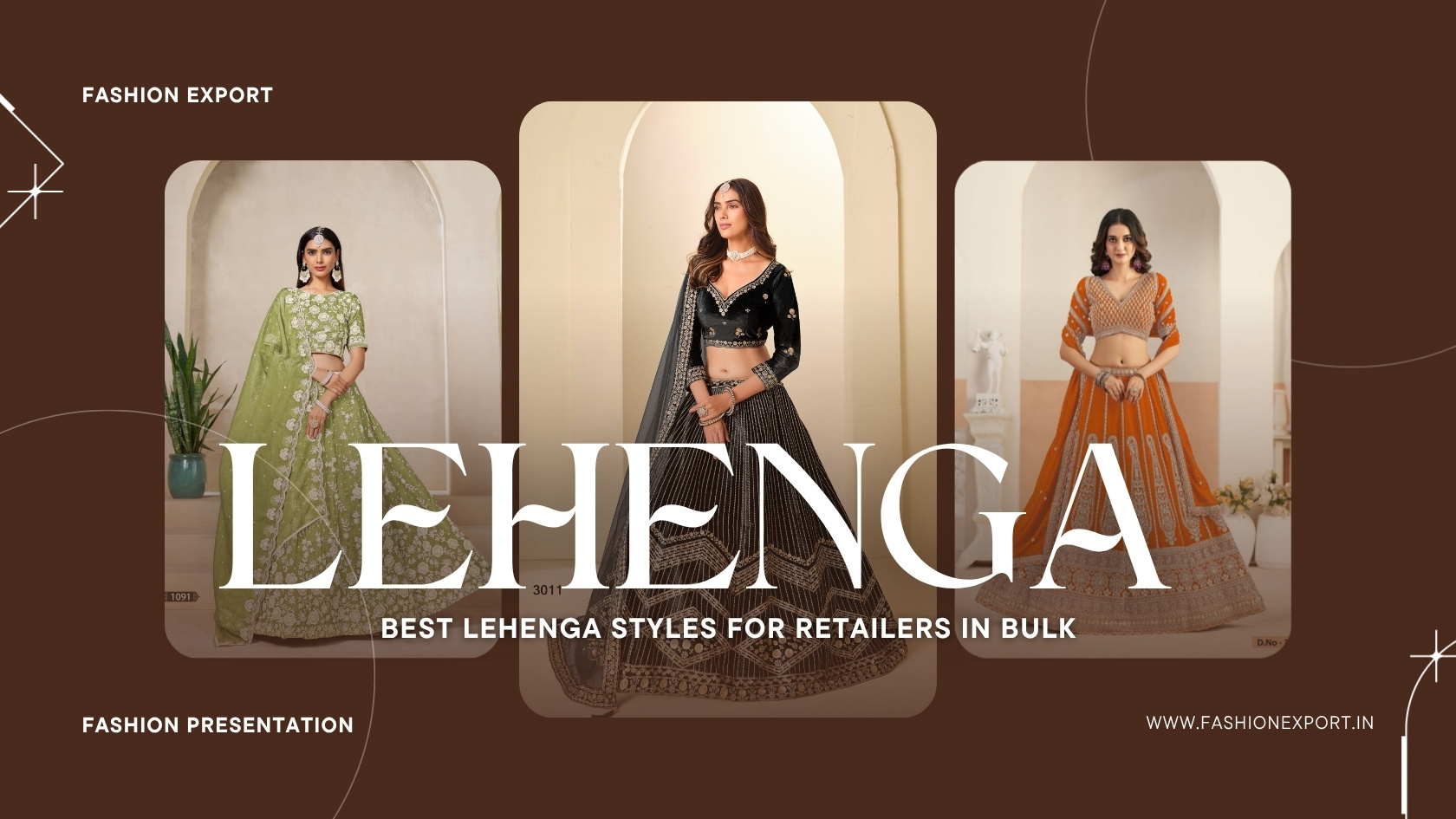
Lehengas continue to be one of the most powerful product categories in the ethnic wear industry. For retailers, boutiques, online sellers, and exporters, lehengas offer high demand, strong margins, and year-round sales opportunities driven by weddings, festivals, parties, and cultural events. Buying lehengas in bulk allows retailers to build a diverse collection, maintain competitive pricing, and scale their business efficiently.
This detailed guide explores the best lehenga styles for retailers in bulk, including trending designs, fabrics, color preferences, sourcing strategies, pricing insights, and inventory planning. Understanding these elements helps retailers make smart buying decisions and maximize profitability.
Lehengas are no longer limited to bridal wear. They have evolved into a versatile category that caters to brides, bridesmaids, wedding guests, festive shoppers, and fashion-conscious consumers. Modern lehenga designs combine traditional craftsmanship with contemporary styling, making them popular across different age groups.
Retailers benefit from this demand because lehengas are considered premium products with high perceived value. Customers are willing to invest in well-designed lehengas, which allows retailers to achieve better margins compared to everyday clothing.
The consistent demand across seasons and occasions makes lehengas a reliable category for bulk buying.
Choosing the right lehenga styles is critical for retail success. A well-balanced inventory ensures that retailers can cater to different customer preferences, price segments, and occasions.
Retailers should avoid focusing on a single style. Instead, they should create a mix of traditional, modern, lightweight, and heavy lehengas. This approach increases sales potential and reduces the risk of unsold inventory.
Understanding customer behavior and market trends helps retailers select styles that perform well.
Bridal lehengas are the most high-value category in lehenga collections. These lehengas are designed with rich fabrics, heavy embroidery, and intricate detailing.
Common features of bridal lehengas include zari work, zardozi embroidery, stone embellishments, and traditional motifs. Classic colors such as red, maroon, and bridal pink remain popular, while modern brides are also choosing pastel shades.
Retailers should stock a limited but carefully selected range of bridal lehengas, as these items require higher investment but offer strong returns.
Party wear lehengas are one of the fastest-selling categories for retailers. These lehengas are lighter, more affordable, and suitable for multiple occasions such as weddings, receptions, and festive events.
Popular features include lightweight fabrics, minimal embroidery, and trendy designs. Party wear lehengas appeal to a wide customer base, making them ideal for bulk buying.
Retailers should focus on stocking a variety of colors, patterns, and price ranges in this category.
Festive lehengas are designed for celebrations such as Diwali, Navratri, Eid, and other cultural events. These lehengas are vibrant, comfortable, and stylish.
Bright colors, traditional prints, mirror work, and light embroidery are common features. Festive lehengas sell quickly during peak seasons, so retailers should plan inventory in advance.
Bulk buying festive lehengas ensures availability during high-demand periods.
Designer lehengas cater to customers who seek unique and premium designs. These lehengas often feature innovative cuts, exclusive patterns, and high-quality craftsmanship.
Retailers targeting boutique or premium markets should include designer lehengas in their collection. These pieces can be priced higher due to their exclusivity.
Designer lehengas help build brand identity and attract high-value customers.
Fusion lehengas combine traditional elements with modern styling. These designs are gaining popularity among younger customers and international buyers.
Examples include lehengas paired with crop tops, jackets, capes, or contemporary blouses. Fusion lehengas are ideal for engagement parties, receptions, and fashion events.
Retailers should include fusion styles to appeal to modern fashion trends.
Lightweight lehengas are comfortable and easy to wear, making them suitable for casual events and smaller functions. These lehengas use breathable fabrics and minimal embroidery.
They are affordable and attract budget-conscious customers. Bulk buyers should include lightweight options to ensure consistent sales.
Fabric selection plays a key role in the success of lehenga collections. Different fabrics create different looks and suit various occasions.
Silk and raw silk are preferred for bridal and traditional lehengas. Velvet is ideal for winter weddings and luxury designs. Net is used for layered and embellished lehengas. Georgette and chiffon provide a flowy and lightweight feel. Organza and satin are popular for modern and designer styles.
Retailers should stock a mix of fabrics to cater to different preferences.
Embroidery adds value and visual appeal to lehengas. Popular styles include zari, zardozi, thread work, sequins, mirror work, and bead embroidery.
Modern trends also include minimal embroidery, floral patterns, and digital prints. Retailers should balance traditional and contemporary designs to meet diverse customer demands.
Color selection is crucial for retail success. Traditional colors like red, maroon, and gold remain evergreen. Pastel shades such as blush pink, lavender, and mint are trending among modern buyers.
Jewel tones like emerald, navy, and wine are popular for evening wear. Retailers should maintain a diverse color palette to attract different customer segments.
Sourcing plays a major role in bulk buying success. Retailers should work with reliable suppliers who offer consistent quality, competitive pricing, and timely delivery.
India is a leading hub for lehenga manufacturing, and suppliers like Fashion Export provide a wide range of lehenga styles suitable for retailers, boutiques, and exporters. Their collections focus on quality, trend relevance, and market demand. Retailers can explore wholesale options at https://fashionexport.in/ to find suitable products for their business.
Pricing should be based on product quality, design, and market demand. Retailers should consider all costs, including wholesale price, logistics, packaging, and marketing.
Competitive pricing helps attract customers, while premium pricing for designer pieces increases margins. A balanced pricing strategy ensures profitability.
Inventory planning is essential to avoid overstocking or stock shortages. Retailers should analyze sales trends, seasonal demand, and customer preferences.
A mix of fast-moving and premium products helps maintain steady cash flow. Regular monitoring and restocking ensure smooth operations.
Lehengas perform well in both offline stores and online platforms. Retailers can expand their reach through e-commerce websites, social media, and marketplaces.
High-quality images, detailed descriptions, and styling suggestions improve online sales. Offline stores benefit from physical display and customer interaction.
Proper packaging protects lehengas and enhances customer experience. Retailers should ensure that products are packed securely and presented attractively.
Good presentation adds value and builds customer trust.
Lehengas have strong demand in international markets. Retailers can expand their business by targeting global customers.
Working with export-ready suppliers simplifies logistics and ensures compliance with international standards.
Strong supplier relationships provide better pricing, consistent quality, and access to new designs. Retailers should focus on building long-term partnerships for sustainable growth.
Retailers should avoid buying based only on low prices, ignoring quality checks, or overstocking without demand analysis. Staying updated with trends and customer preferences is essential.
The lehenga market continues to grow as fashion trends evolve. Retailers who adapt to changing preferences and maintain quality standards can achieve long-term success.
Lehengas are a powerful product category for retailers looking to build a profitable fashion business. By selecting the best styles, focusing on quality, and working with trusted suppliers like Fashion Export, retailers can create a strong and diverse collection.
Exploring wholesale options at Fashion Export helps retailers access high-quality lehenga styles that meet modern market demands. With the right strategy, bulk lehenga buying can drive consistent growth and long-term success.