
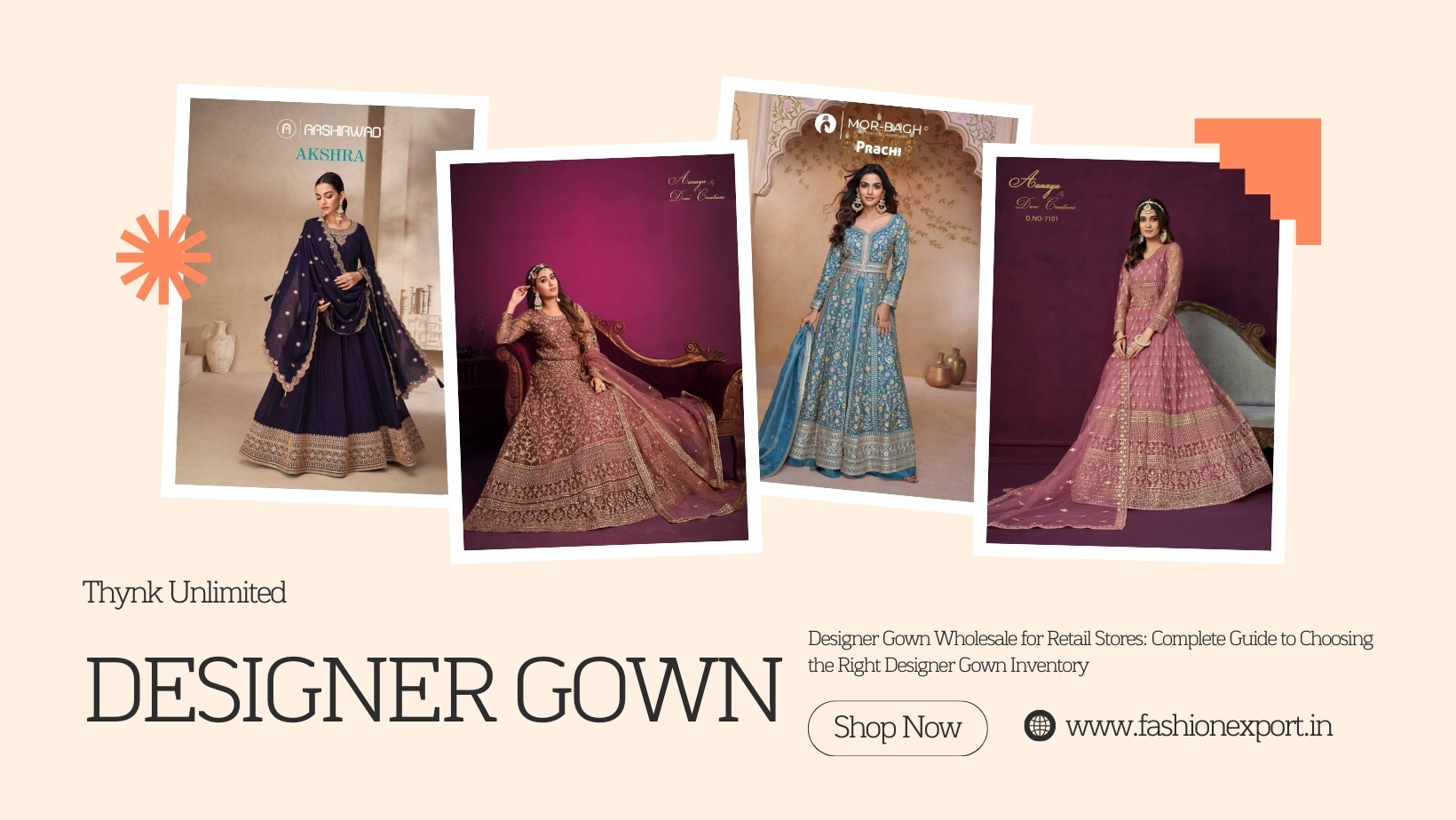
Retail fashion stores today are constantly searching for trending ethnic and Indo-western outfits that attract customers and increase sales. Among all women’s fashion categories, the Designer Gown segment has become one of the most profitable and fast-growing markets. Designer gowns are popular for weddings, parties, engagement ceremonies, festive events, and even modern casual occasions. Because of this rising demand, retail stores are increasingly focusing on wholesale sourcing to build a strong designer gown collection.
Buying Designer Gown products through wholesale channels allows retailers to maintain good profit margins while offering a wide variety of styles to customers. Retail buyers can choose from embroidered gowns, party wear gowns, Indo-western gowns, bridal gowns, and lightweight casual gowns depending on their store’s target audience. The key to success in this business is selecting the right supplier, choosing trending designs, and maintaining consistent quality in every gown piece.
A well-planned designer gown inventory helps retail stores attract walk-in customers and online shoppers. Retailers who stock stylish and high-quality Designer Gown collections often experience higher repeat purchases and stronger customer loyalty. This guide explains how retail stores can choose the right wholesale gowns, identify profitable styles, and grow their designer gown business.
Fashion trends have changed dramatically in recent years. Customers today want outfits that combine traditional elegance with modern styling. This is exactly where the Designer Gown category stands out. Gowns provide the elegance of traditional wear while offering the comfort and style of contemporary fashion.
Retail stores benefit from selling designer gowns in several ways. First, designer gowns have higher perceived value compared to regular dresses. Customers often associate gowns with special occasions, which means they are willing to pay a higher price. Second, gowns come in a wide variety of fabrics, embroidery styles, and silhouettes, allowing retailers to maintain a diverse inventory. Third, the Designer Gown category works well for both offline boutiques and online fashion stores.
Another major advantage is that designer gowns appeal to a wide age group. Teenagers prefer lightweight party gowns, young women choose Indo-western designer gowns for events, and brides or wedding guests often look for heavy embroidered gowns. This wide customer base makes the Designer Gown segment one of the most reliable product categories for retail stores.
Retailers must understand the various types of gowns available in the market so they can stock the right inventory. Each type of Designer Gown serves a specific purpose and appeals to a particular customer segment.
Party wear gowns are among the fastest selling items in fashion boutiques. These gowns often feature sequins work, embroidery, stylish sleeves, and elegant silhouettes. Party wear Designer Gown styles are usually made from fabrics like georgette, chiffon, crepe, satin, or shimmer fabric.
Customers often purchase these gowns for birthday celebrations, receptions, evening parties, and special events. Retail stores that maintain a good variety of party wear gowns tend to attract younger customers who follow modern fashion trends.
Bridal gowns and wedding gowns represent the premium segment of the Designer Gown market. These gowns often feature heavy embroidery, zari work, stone work, or sequins detailing. Fabrics such as velvet, satin, net, and silk blends are commonly used for bridal collections.
Retail stores that cater to wedding shoppers should include at least a few luxury designer gowns in their catalog. Even if bridal gowns sell in lower quantity, their higher price point increases overall store profit.
Indo-western gowns combine traditional Indian elements with western silhouettes. These gowns may feature cape designs, asymmetric cuts, jacket styles, or layered skirts. This style of Designer Gown is extremely popular among modern women who want a fusion look.
Indo-western gowns work well for festivals, family functions, and engagement ceremonies. Retail stores that focus on trendy fashion collections often prioritize Indo-western gown styles.
Casual designer gowns are designed for comfort and everyday elegance. These gowns are typically made from breathable fabrics like rayon, cotton blends, and soft crepe. Lightweight Designer Gown collections are perfect for day events, casual gatherings, and summer wear.
Retail stores should maintain a balance between heavy gowns and lightweight gowns so they can serve different types of customers.
Fabric selection plays a major role in the success of a designer gown collection. The right fabric improves the gown’s fall, comfort, and visual appeal. Retail stores should focus on fabrics that combine durability with elegance.
Georgette is one of the most popular fabrics used in Designer Gown collections. It provides a soft drape and works well for both embroidered and printed designs. Chiffon is another lightweight fabric that creates graceful movement in gowns.
Satin fabric is widely used in luxury gowns because of its glossy finish and premium appearance. Crepe fabric is known for its smooth texture and comfortable feel, making it suitable for modern gowns. Net fabric is often used in layered gowns and bridal gowns because it creates volume and supports embroidery.
Retailers should select gowns made from high-quality fabrics because customers often judge the value of a Designer Gown based on fabric feel and finishing.
Retail stores must stay updated with fashion trends to ensure that their gown collections remain attractive to customers. Understanding current trends helps retailers choose the right Designer Gown designs.
Popular gown trends currently include pastel colors, minimal embroidery styles, cape gowns, ruffle gowns, and layered silhouettes. Customers are also showing increasing interest in sustainable fabrics and lightweight gowns that can be worn for long hours.
Retailers should monitor social media platforms, fashion magazines, and designer collections to identify emerging trends. Websites such as Vogue provide insights into global fashion movements and style inspirations that influence gown designs (https://www.vogue.com).
By analyzing these trends, retailers can stock Designer Gown collections that align with customer expectations.
Wholesale purchasing offers several advantages for retail stores. When retailers buy gowns directly from wholesalers, they receive competitive pricing and access to a larger product variety. This helps them build a strong Designer Gown catalog without increasing their inventory cost significantly.
Wholesale suppliers also provide consistent stock availability, which is important for retailers who receive repeat orders from customers. Bulk purchasing allows retailers to maintain better profit margins while still offering competitive retail prices.
Another advantage of wholesale sourcing is that retailers can request custom design variations, color options, or size ranges. This flexibility allows retail stores to offer unique Designer Gown collections that differentiate them from competitors.
Retail stores looking for reliable wholesale suppliers often prioritize companies that understand market trends and maintain consistent quality. Fashion Export is one such supplier known for offering a wide range of stylish gown collections suitable for retail businesses.
Fashion Export provides wholesale collections designed for boutiques, fashion retailers, and online sellers. Their catalog includes party wear gowns, festive gowns, embroidered gowns, and modern fusion styles that match current fashion trends.
Retail buyers can explore various Designer Gown collections and discover trending styles through the official website https://fashionexport.in/. Working with a professional supplier ensures consistent product quality and smooth order processing.
Before purchasing gowns in bulk, retailers should evaluate several important factors to ensure they select the right inventory.
Fabric quality should always be checked carefully. High-quality fabric improves comfort and durability. Stitching and finishing should also be inspected because poor finishing can reduce the perceived value of a Designer Gown.
Retailers should also analyze size availability, color variety, and embroidery quality. Offering multiple sizes and color options increases the chances of satisfying different customer preferences.
Pricing strategy is another important consideration. Retailers should calculate wholesale cost, shipping cost, and expected profit margin before finalizing their orders.
Retail stores that regularly introduce new designer gown collections often experience higher visibility in both offline and online markets. Gowns are visually attractive garments that photograph well, making them perfect for social media marketing.
Retailers can showcase Designer Gown collections through Instagram posts, reels, and online catalogs. High-quality product photography helps customers understand the style and fabric of the gown before purchasing.
Stores can also promote gowns during wedding seasons, festive seasons, and special sale events. Offering limited edition gowns or exclusive designs can create excitement among customers and encourage faster purchases.
Retail stores can improve sales by following a few practical strategies. Displaying gowns prominently in the store window attracts customer attention. Online retailers should upload clear images, fabric descriptions, and styling suggestions for each Designer Gown.
Another effective strategy is offering styling advice to customers. Many buyers appreciate guidance about which gown suits their body type or event type. Providing this assistance builds trust and improves the shopping experience.
Retailers should also focus on maintaining a balanced inventory. Having a mix of budget gowns, mid-range gowns, and premium gowns ensures that customers from different price segments can find suitable options.
The global demand for gowns continues to increase as fashion becomes more diverse and event-focused. Modern consumers are experimenting with new silhouettes, fabrics, and colors. This trend creates significant opportunities for retailers who specialize in Designer Gown collections.
Online shopping platforms and social media have also expanded the reach of fashion retailers. Customers now discover new styles through digital platforms before visiting stores or making online purchases.
Retailers who stay updated with fashion trends, maintain high-quality inventory, and collaborate with reliable wholesale suppliers will continue to benefit from the growing popularity of designer gowns.
The Designer Gown market offers strong growth potential for retail fashion stores. By sourcing gowns through wholesale suppliers, retailers can maintain competitive pricing while offering a diverse and stylish inventory. Understanding different gown categories, selecting high-quality fabrics, and staying updated with fashion trends are essential steps in building a successful gown business.
Working with trusted suppliers like Fashion Export allows retailers to access trending gown collections and maintain consistent quality in their inventory. Retail stores that invest in well-selected Designer Gown products can attract more customers, increase store visibility, and achieve long-term success in the fashion industry.