
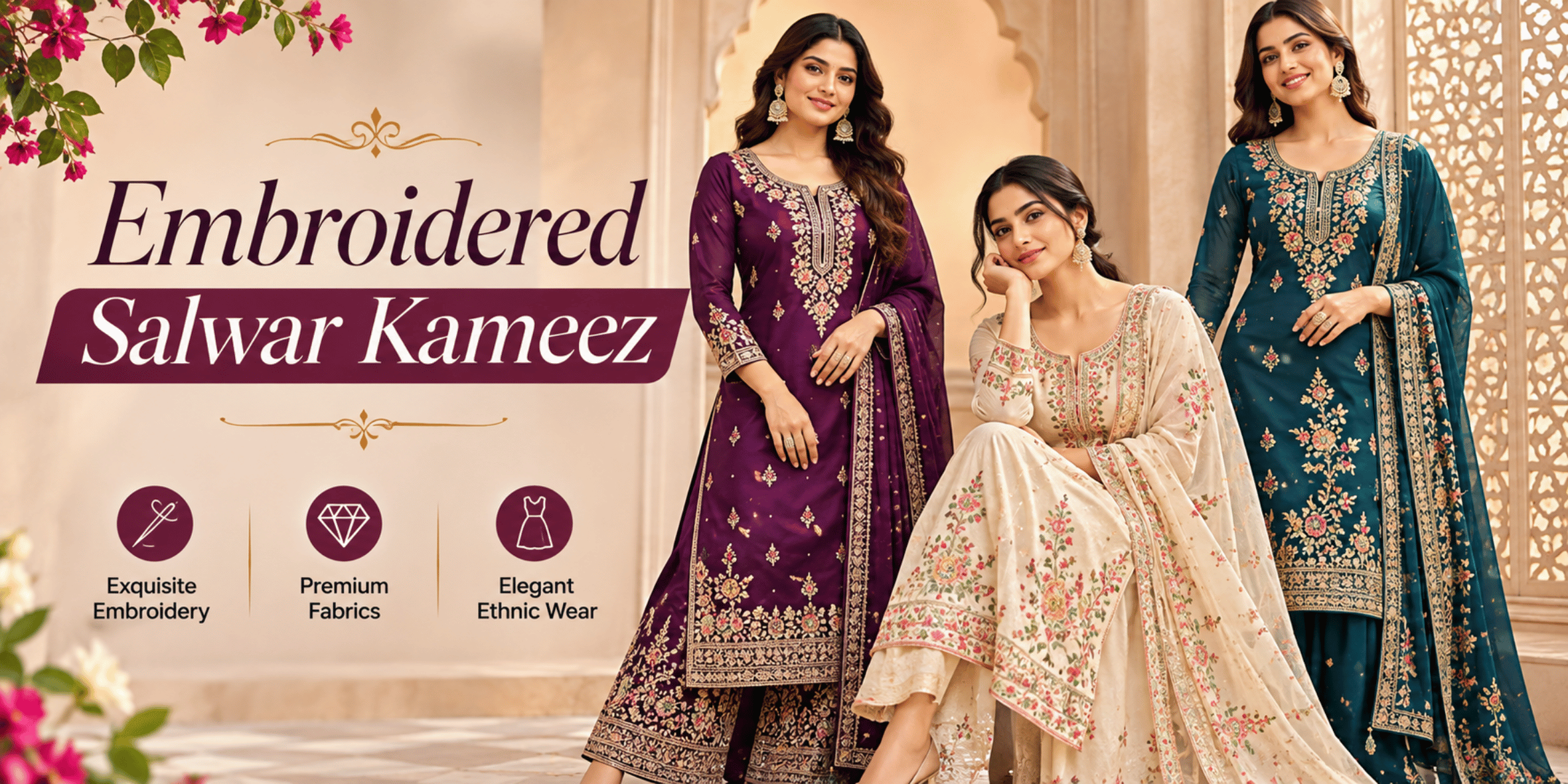
Indian ethnic clothing continues to attract attention from fashion retailers, boutiques, wholesalers, and international buyers who want to offer distinctive designs to their customers. Among the many traditional clothing categories, EMBROIDERED SALWAR KAMEEZ stands out for its combination of decorative craftsmanship, coordinated styling, and versatility. Fashionexport, through its website https://fashionexport.in/, provides a starting point for businesses researching Indian fashion and wholesale clothing sourcing opportunities.
This clothing category can serve several customer segments, from shoppers looking for comfortable festive outfits to buyers searching for elaborate occasion wear. Its design possibilities include delicate threadwork, decorative necklines, embellished sleeves, embroidered borders, and coordinated dupattas. The range of available styles makes it relevant to boutiques that want to build collections for different occasions and price points.
For international buyers, successful sourcing requires more than selecting attractive designs. Businesses must understand fabric characteristics, embroidery quality, garment construction, size consistency, order quantities, and production schedules. They must also evaluate the supplier's communication, sample process, packaging standards, and ability to meet agreed requirements.
This guide explains the product category, popular styles, materials, embroidery techniques, quality considerations, and practical steps for selecting a wholesale supplier. It also covers how retailers can plan their collections according to customer demand.
An embroidered salwar kameez is a traditional Indian outfit consisting of a kameez, which is the upper garment, and a salwar, which is the bottom garment. Many designs also include a dupatta that completes the outfit.
The distinguishing feature is decorative embroidery added to one or more parts of the clothing. Embroidery may be used to create floral patterns, geometric designs, traditional motifs, borders, decorative necklines, or elaborate all-over patterns.
The style can range from simple everyday clothing to highly decorated outfits suitable for special occasions.
Common design features include:
The outfit's appearance depends on the relationship between the fabric, embroidery, color, silhouette, and finishing. A simple cotton suit with light threadwork can create a different look from a heavily embellished festive outfit.
Retailers should identify the intended customer and occasion before selecting products. This helps prevent a collection from becoming too broad or inconsistent.
Boutiques often need collections that offer customers recognizable styles while providing enough variety to maintain interest. Embroidered ethnic clothing can support this goal because it can be presented in different levels of decoration, fabric types, and price segments.
Different designs can be selected for casual outings, office-friendly ethnic styling, festive gatherings, family celebrations, and formal occasions.
A boutique may stock lightweight designs for regular wear and more elaborate outfits for special events. The exact assortment should reflect customer demand and the boutique's positioning.
Embroidery can be incorporated into both traditional silhouettes and more contemporary cuts. A retailer may choose classic kameez designs, straight-cut suits, Anarkali-inspired outfits, or modern coordinated sets.
This flexibility allows boutiques to develop collections that combine familiar ethnic elements with current styling preferences.
The complexity of embroidery, fabric selection, construction, and finishing can influence the final product price. Retailers can therefore consider different product levels within one category, provided the quality and pricing match the intended customer.
Embroidery creates details that can be highlighted through product photography and in-store displays. Close-up images of necklines, sleeves, borders, and dupattas can help customers understand the design.
Festive periods and wedding seasons can create demand for more decorative outfits. Retailers should plan orders according to their market calendar and allow sufficient time for production and shipping.
For businesses considering EMBROIDERED SALWAR KAMEEZ collections, the most useful starting point is a clearly defined customer profile and product strategy.
Different silhouettes serve different customer preferences. A carefully planned collection may combine several styles without losing a consistent visual identity.
Straight-cut suits generally feature a relatively straight kameez silhouette paired with matching or complementary bottoms. They can be suitable for casual, semi-formal, and selected festive collections.
Embroidery may be concentrated around the neckline, sleeves, front panel, or hem. Buyers should assess the placement and scale of decoration because it affects the overall appearance.
Anarkali-inspired outfits feature a more flared upper garment. Depending on the design, the flare may be subtle or more dramatic.
Embroidery can appear on the bodice, neckline, sleeves, or lower panels. The garment's construction and fabric weight should be considered because they influence how the outfit falls and moves.
Palazzo suits combine a kameez with wide-legged trousers. The bottom garment creates a relaxed, coordinated look that can be adapted for everyday or festive collections.
Buyers should examine the waist construction, trouser length, fabric drape, and embroidery balance between the top and bottom.
Sharara-inspired sets feature flared bottoms and coordinated upper garments. They are often considered for celebration and occasion-wear collections.
The volume and construction of the bottom garment can affect fabric consumption, garment weight, and packing requirements. Retailers should check the complete set rather than evaluating the kameez alone.
Churidar suits are traditionally paired with fitted bottoms that gather around the ankle. They can be offered in classic or contemporary styles.
The fabric's stretch, fit, and construction are important when evaluating the bottom garment. Buyers should check measurements and comfort carefully.
Punjabi-inspired suits can include shorter or medium-length kameez designs paired with salwar bottoms. Depending on the collection, they may feature traditional embroidery, printed fabrics, and decorative dupattas.
These designs can help boutiques offer a recognizable ethnic style to customers who prefer traditional clothing.
Some contemporary collections include jackets, layered tops, or additional decorative pieces. These combinations may offer a distinctive appearance for customers looking for modern ethnic styling.
Before ordering, buyers should confirm exactly which components are included in the set.
Fabric selection influences garment comfort, drape, appearance, embroidery suitability, durability, and cost. Buyers should request accurate material details instead of relying only on general fabric names.
Cotton is commonly considered for comfortable everyday clothing. It may be suitable for lightweight embroidered designs, particularly when the decoration is not excessively heavy.
Buyers should check fabric weight, shrinkage, colorfastness, and the care instructions. The exact performance depends on the cotton construction and any blended fibers.
Rayon and viscose-based textiles can offer a soft feel and fluid drape. They may be used in selected casual and dressier designs.
Retailers should confirm the exact fiber composition because the terms may refer to different material specifications. Care and washing requirements should also be checked.
Georgette is often selected for flowing outfits and layered designs. It may be used for kameez garments, dupattas, and selected festive styles.
Its suitability depends on weight, opacity, construction, and the type of embroidery applied. Some designs may require lining.
Chiffon is lightweight and can create a flowing appearance. It is often considered for dupattas, overlays, sleeves, and layered garments.
Buyers should check transparency, seam finishing, snagging risk, and whether the fabric needs additional support.
Silk and silk-blend materials can be used for dressier collections. Their appearance and performance vary according to fiber composition and fabric construction.
Retailers should request exact composition details rather than assuming that a fabric described as silk is made entirely from natural silk.
Crepe fabrics are available in different compositions and textures. They can be used for contemporary ethnic silhouettes, depending on the fabric weight and drape.
Buyers should confirm the material specification, surface finish, and care requirements.
Net fabrics may be used for dupattas, sleeves, overlays, and selected decorative sections. Their transparency and delicate construction require careful handling.
When sourcing EMBROIDERED SALWAR KAMEEZ, buyers should evaluate the relationship between the base fabric and the embroidery. A suitable material should support the decoration without making the garment uncomfortable or excessively heavy.
Embroidery is one of the most important design features in this clothing category. Different techniques create different visual effects and may require different production processes.
Thread embroidery uses decorative stitching to create patterns and motifs. It can be applied to necklines, sleeves, front panels, borders, and other garment sections.
Buyers should inspect stitch consistency, thread security, pattern clarity, and finishing on the reverse side.
Zari-style work uses metallic-looking threads or decorative elements to create a more ornate appearance. It is often considered for festive and occasion-wear designs.
Retailers should confirm the material used and evaluate whether the decoration is securely attached.
Sequins add shine and visual texture. They may be used as small accents or across larger areas of the garment.
Check for loose sequins, sharp edges, uneven placement, and potential snagging. The garment should remain comfortable during normal wear.
Beads can create texture and decorative patterns. They may be applied individually or combined with other embellishment techniques.
Because beadwork can increase garment weight, buyers should examine the strength of the attachment and the fabric's ability to support it.
Mirror-work-inspired designs use reflective decorative elements to create a distinctive appearance. The construction should ensure that these components are securely attached and suitable for the garment's intended use.
Appliqué involves attaching shaped fabric pieces to a base material to create decorative designs. It may be combined with embroidery or other finishing techniques.
Inspect the edges, attachment points, and consistency of the decorative pattern.
Machine embroidery can support repeated patterns and consistent decorative placement across multiple garments. The final quality depends on the design file, machine settings, thread, fabric, and production checks.
Hand embroidery can involve detailed stitching performed manually. It may require additional production time and can have variations associated with manual craftsmanship.
Buyers should clarify whether the embroidery is handmade, machine-produced, or a combination. Product descriptions should accurately reflect the actual technique.
A garment's embroidery should be judged by its workmanship, comfort, durability, and consistency with the approved design.
Look for even stitching and clear pattern definition. Loose threads, skipped stitches, and irregular areas may indicate finishing problems.
The embroidery should be placed according to the approved design. Check whether motifs are balanced across the neckline, front panel, sleeves, and hem.
Gently inspect decorative areas for loose threads, beads, sequins, and other components. The attachment should be suitable for the garment's intended use.
The inside of the garment should not contain excessive loose threads or uncomfortable areas. Internal finishing can affect how the outfit feels when worn.
Heavy decoration on lightweight fabric may create stress or distortion. Buyers should inspect whether the base fabric supports the selected embroidery.
Check whether the thread colors and decorative elements match the approved sample. Differences may be especially noticeable in coordinated sets.
Embroidery should not create sharp or rough areas that irritate the wearer. Pay attention to the neckline, sleeves, underarms, and other areas that come into direct contact with the body.
Color selection influences the visual identity of a collection and its suitability for different markets.
Some boutiques may prefer classic combinations such as red and gold, navy and silver, cream and gold, or green with contrasting embroidery. These combinations can suit selected festive and traditional collections.
Neutral colors such as beige, ivory, grey, black, and muted pastels may appeal to customers who prefer understated styling.
Bright shades can be considered for celebrations and seasonal collections. Retailers should choose them according to local preferences and the intended selling period.
The dupatta should complement the kameez and bottom garment. Buyers should confirm whether the dupatta is included and whether its fabric and embroidery match the agreed specification.
Color preferences can vary between regions, customer groups, and seasons. Boutiques should use customer feedback and sales history rather than assuming that one palette will work in every market.
Sizing is an important factor in wholesale apparel, particularly when products are sold internationally. Different suppliers may use different measurement standards, and a size label alone does not guarantee a consistent fit.
Buyers should request a detailed size chart for every relevant style.
Important measurements may include:
Body measurements describe the wearer's body, while garment measurements describe the finished clothing. Buyers should confirm which type of measurement appears on the supplier's chart.
The amount of ease built into a garment influences comfort and appearance. A straight-cut kameez, fitted churidar, and flared Anarkali design require different fit considerations.
Size grading is the process of adjusting a base pattern to create different sizes. Retailers should check that the size range follows consistent proportions rather than relying only on the labels.
If the boutique serves a specific market, provide its measurement expectations and request confirmation that the supplier can meet them.
For EMBROIDERED SALWAR KAMEEZ collections, sizing should be checked alongside embroidery placement because changes in garment dimensions may affect how decorative patterns appear across sizes.
Minimum order quantity, or MOQ, is the smallest order a supplier accepts under specified conditions. It may vary according to the style, fabric, color, embroidery complexity, and customization requirements.
Buyers should ask whether the MOQ applies per design, per color, per size, or to the complete order.
Ready-made products may be available for immediate or relatively quick dispatch, depending on stock status. Buyers should confirm actual quantities and size availability before payment.
Custom production may involve fabric procurement, pattern development, embroidery preparation, stitching, and finishing. It can require a different MOQ and longer lead time.
A focused assortment allows boutiques to test customer demand without investing too heavily in untested designs.
Ask whether the order can include mixed sizes and whether the supplier has restrictions on the size distribution.
The purchase order should identify:
Changes to embroidery, fabric, colors, measurements, labels, or packaging may affect the price and minimum order quantity. Buyers should request written quotations for custom work.
Choosing a supplier is a commercial decision that can affect product consistency, customer satisfaction, delivery schedules, and profitability.
Check whether the supplier offers designs that match the boutique's target market. A large catalogue is not necessarily useful if the available styles do not fit the business.
Determine whether the business is a direct manufacturer, wholesaler, exporter, or sourcing intermediary. Each business model may have different capabilities and responsibilities.
Ask for fabric composition, measurements, embroidery technique, available sizes, product photographs, and packaging information.
A physical sample can provide a better understanding of the product than catalogue images alone. Review fabric, stitching, embroidery, fit, and finishing.
Suppliers should respond clearly to questions about pricing, minimum quantities, production, and delivery. Important commitments should be recorded in writing.
Confirm the payment schedule, order cancellation terms, customization charges, inspection arrangements, and defect-resolution process.
International buyers should establish whether the supplier can support the required commercial documents and coordinate with the agreed logistics provider.
When choosing EMBROIDERED SALWAR KAMEEZ products for a boutique, evaluate suppliers using consistent requirements rather than comparing prices alone.
Samples allow buyers to inspect the actual garment before approving a large purchase. They are particularly important when the design includes complex embroidery, delicate fabrics, or custom measurements.
Provide the design reference, fabric, color, embroidery placement, measurements, lining, and finishing requirements.
Check the fabric, construction, fit, stitching, embroidery, and overall appearance. Compare the sample with the reference image or technical specification.
If changes are needed, provide specific feedback and ask for written confirmation of the proposed corrections.
Keep a record of the approved sample or its detailed specifications. This can serve as a reference during bulk production.
Ask whether sample development, customization, and courier costs are charged separately. Clarify whether any charges can be adjusted against a bulk order.
An effective ethnic clothing collection begins with a clear understanding of the target customer, garment styles, fabric choices, embroidery techniques, and expected quality. Boutiques should consider how each design fits their brand, price range, and customer requirements before selecting products.
When sourcing EMBROIDERED SALWAR KAMEEZ, buyers should inspect fabric and embroidery quality, verify measurements, request samples, and clarify minimum order quantities. Supplier evaluation should also include communication, production capability, pricing transparency, and delivery arrangements.
Part 2 covers international export requirements, shipping, packaging, quality control, pricing, inventory planning, Instagram promotion, e-commerce SEO, and frequently asked questions for wholesale buyers.
Export documentation is an important part of international clothing trade. Boutiques, wholesalers, and garment importers sourcing embroidered salwar kameez from India should understand the documents required before placing bulk orders.
Common export documents include:
The exact documents depend on the destination country, shipping method, product classification, and buyer requirements.
Before confirming an international order, buyers should discuss documentation requirements with their supplier and customs broker. This helps reduce delays and prevents avoidable problems during customs clearance.
Shipping plays an important role in the overall cost and delivery timeline of an international wholesale purchase. Buyers sourcing embroidered salwar kameez from India generally consider three major shipping options.
Air freight is suitable for urgent orders, smaller shipments, and premium collections that need to reach the destination quickly. It generally offers shorter transit times than sea freight, although the cost per kilogram is usually higher.
Sea freight is commonly considered for larger wholesale shipments. It can be more economical for bulk quantities, but buyers should plan for longer transit times and additional port-related procedures.
Courier services may be suitable for samples, small packages, and selected low-volume shipments. Buyers should compare courier charges, delivery coverage, customs handling, and tracking facilities before choosing this option.
The best shipping method depends on order size, delivery deadline, destination, and total landed cost.
Proper packaging protects garments during storage, handling, and transportation. Embroidered garments may include delicate threadwork, decorative elements, sequins, beads, and other embellishments that require additional care.
Wholesale buyers should discuss packaging requirements before production or dispatch.
Important packaging considerations include:
For premium retail collections, individual garment packaging can also improve presentation when products arrive at the buyer's warehouse.
Quality control is essential when purchasing embroidered salwar kameez in wholesale quantities. A garment may look attractive in a product photograph, but buyers should evaluate its actual construction, fabric, stitching, embroidery, and finishing.
A practical quality inspection should cover the following areas.
Check whether the fabric matches the approved sample. Look for uneven texture, visible defects, stains, unwanted marks, and differences in thickness.
Inspect the embroidery for loose threads, uneven patterns, missing decorative elements, and inconsistent stitching.
Check seams, hems, sleeves, necklines, closures, and garment finishing. Poor stitching can affect durability and customer satisfaction.
Compare garment measurements with the approved size chart. Pay attention to bust, waist, hip, shoulder, sleeve length, and garment length where applicable.
Compare bulk garments with the approved colour reference. Colour differences can become a problem when multiple pieces are sold as the same design.
Inspect the overall garment for wrinkles, loose embellishments, unfinished edges, and packaging-related damage.
Buyers should establish acceptable quality standards before confirming bulk production. A written quality checklist makes inspection easier for both parties.
Wholesale pricing is not the only factor that determines whether an embroidered salwar kameez collection is profitable. International buyers should calculate the complete landed cost before placing an order.
The landed cost may include:
For example, a garment with an attractive purchase price may become expensive after international shipping and import charges are included.
Boutique owners should calculate the expected landed cost per garment and compare it with their intended retail price. This helps determine whether the product offers a suitable profit margin.
It is also useful to compare multiple suppliers based on product quality, minimum order quantity, communication, production timelines, and total cost rather than selecting a supplier based only on the lowest quotation.
Inventory planning helps retailers maintain a balanced collection without investing too much money in slow-moving designs.
Instead of purchasing a large quantity of one pattern, boutiques can consider a collection with different embroidery styles, colours, fabrics, and silhouettes.
A balanced inventory may include:
Buyers should also consider local customer preferences. A design that performs well in one market may not have the same demand in another.
Before placing repeat orders, retailers should review sales data, customer feedback, returns, and the performance of individual designs.
An embroidered salwar kameez collection can become more attractive when it offers variety without losing a consistent brand identity.
Boutiques can build collections around different customer requirements.
These designs generally focus on comfortable fabrics, practical silhouettes, and lighter embroidery. They may appeal to customers looking for ethnic clothing for regular use.
Straight-cut silhouettes, subtle embroidery, and coordinated dupattas can help create a refined collection for customers who prefer understated ethnic fashion.
Festive collections may include richer colours, decorative necklines, detailed sleeves, and more prominent embroidery.
Premium designs may feature elaborate embroidery, layered styling, decorative dupattas, and carefully selected fabrics.
Offering different categories allows retailers to serve customers with different budgets and occasions.
Instagram is a useful marketing platform for fashion wholesalers, boutique owners, and clothing retailers. It allows businesses to present product designs visually and connect with potential buyers.
Fashionexport can be mentioned as a sourcing reference in relevant promotional content, alongside its website: https://fashionexport.in/.
Retailers can use Instagram to showcase embroidered salwar kameez collections through:
For B2B marketing, captions should clearly explain whether the collection is available for wholesale, the intended buyer category, and how interested businesses can request further details.
High-quality photographs are particularly important for embroidered garments because buyers want to examine the placement, density, and finishing of the decorative work.
A well-organised product page helps online retailers explain the value of an embroidered salwar kameez collection.
A product page should provide useful information rather than relying only on attractive photographs.
Important product details include:
Product Name: Use a clear and descriptive product title.
Fabric: Mention the actual fabric composition where available.
Embroidery Details: Explain the embroidery technique and its placement.
Available Sizes: Provide accurate size information and measurement charts.
Colour Options: List the available colours and explain possible variations.
Set Components: Clearly mention whether the product includes a kameez, salwar, dupatta, or additional pieces.
Care Instructions: Provide suitable washing, drying, and ironing guidance.
Wholesale Information: Where applicable, explain minimum order quantities and enquiry procedures.
Retailers should use original product photographs and accurate descriptions. This helps customers understand what they are purchasing and reduces confusion.
Search engine optimisation can help clothing wholesalers and retailers reach buyers who are actively looking for ethnic fashion products.
A useful SEO strategy should focus on relevant search terms, informative content, product descriptions, and a well-organised website.
The phrase embroidered salwar kameez can be included naturally in:
Related search terms may include embroidered salwar suits, wholesale ethnic wear, Indian salwar kameez supplier, festive salwar suits, and embroidered Indian clothing.
Avoid repeating the same keyword unnaturally. Search engines aim to understand page relevance and usefulness, so content should answer real buyer questions.
Fashionexport can use educational articles and relevant category pages to help international buyers understand Indian ethnic clothing and wholesale sourcing opportunities.
Fashionexport is an online fashion business resource for buyers exploring Indian clothing and wholesale sourcing opportunities. Businesses interested in ethnic wear can visit https://fashionexport.in/ to explore the website and identify relevant product or sourcing information.
When evaluating any supplier, international buyers should confirm the actual product range, available designs, fabric specifications, pricing, minimum order quantities, and shipping arrangements.
For embroidered salwar kameez sourcing, buyers should pay particular attention to embroidery quality, garment measurements, sample approval, and consistency across bulk quantities.
A clear communication process helps buyers understand what is available and whether a collection matches their market requirements.
Wholesale buyers can reduce sourcing risks by avoiding some common mistakes.
Low prices may seem attractive, but poor fabric, inconsistent embroidery, and weak stitching can affect the final product quality.
A sample allows buyers to inspect the garment before committing to a larger order. Skipping this step can increase the risk of receiving products that do not meet expectations.
Different suppliers may follow different measurement standards. Buyers should always confirm the size chart before ordering.
Photographs may not show loose threads, uneven stitching, or weak embellishment attachment. Physical inspection is important wherever possible.
International shipping, customs duties, and local delivery charges can significantly change the total purchase cost.
A collection with limited variation may not appeal to a broad customer base. Buyers should consider different colours, silhouettes, and price categories.
Production and shipping schedules should be agreed upon before placing an order, particularly when buying for seasonal or festive demand.
An embroidered salwar kameez is a traditional Indian outfit consisting of a kameez, salwar, and sometimes a dupatta, decorated with embroidery. The embroidery may appear on the neckline, sleeves, front panel, borders, or other areas of the garment.
Common fabric options include cotton, rayon, georgette, chiffon, crepe, silk blends, and net. The actual fabric depends on the design, intended use, and product specifications.
Yes. Embroidered designs are commonly selected for festive and celebratory collections. Retailers can choose from subtle embroidery to more elaborate decorative patterns according to their target customers.
Buyers should check fabric specifications, embroidery finishing, stitching quality, measurements, available sizes, sample quality, minimum order quantities, delivery schedules, and total landed cost.
Samples allow buyers to evaluate the actual fabric, colour, embroidery, stitching, fit, and overall finishing before confirming a larger order.
Boutiques can use Instagram, product photography, short videos, carousel posts, website product pages, and search-optimised content to showcase their collections.
The price can depend on fabric type, embroidery complexity, embellishments, garment construction, order quantity, packaging, and shipping requirements.
Buyers can research supplier websites, review product information, request samples, compare quotations, and verify business details before placing an order.
The international market for Indian ethnic clothing offers opportunities for boutiques, wholesalers, fashion retailers, and importers looking to expand their traditional and occasion-wear collections. An embroidered salwar kameez can add variety to a retail range through its fabric choices, decorative details, silhouettes, and styling options.
However, successful wholesale sourcing requires more than selecting attractive designs. Buyers should carefully evaluate fabric quality, embroidery finishing, measurements, supplier communication, sample approval, packaging, export documentation, and landed costs.
A planned sourcing process helps businesses reduce purchasing risks and build collections that suit their customers.
Fashionexport provides an online starting point for businesses exploring Indian fashion and clothing sourcing. Visit Fashionexport to learn more about the website and explore relevant sourcing information. Buyers should confirm current product availability and commercial terms directly before placing orders.
With careful planning and attention to quality, retailers can develop an embroidered ethnic wear collection that serves different occasions and customer preferences.