
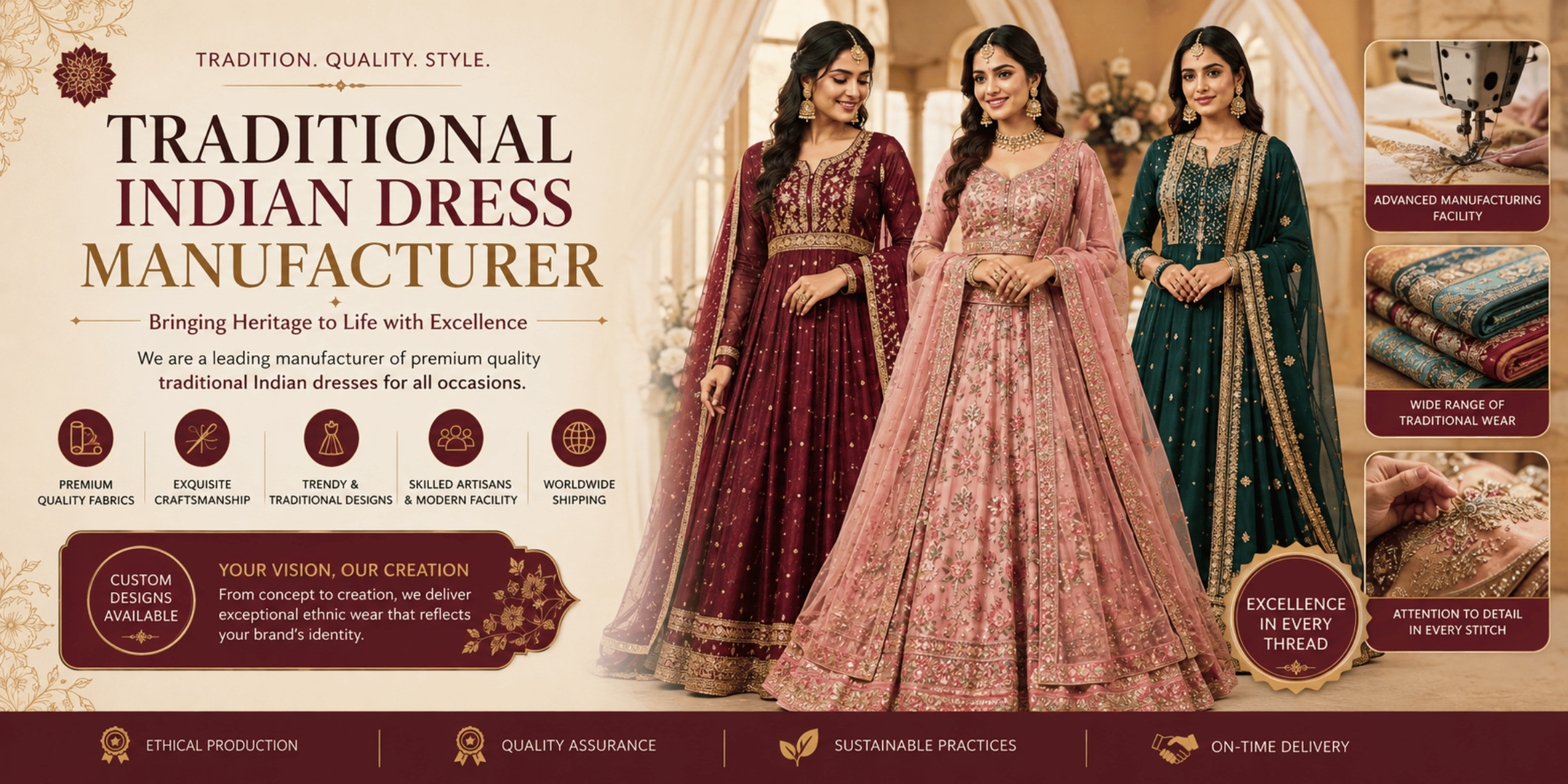
Traditional Indian clothing continues to have an important place in the fashion industry because it combines cultural identity, craftsmanship, colour, comfort, and distinctive design. For boutiques, retailers, wholesalers, importers, and fashion brands, choosing the right Traditional Indian Dress Manufacturer can help build collections that appeal to customers looking for authentic Indian-inspired fashion. Fashionexport is an Indian fashion sourcing company that can help businesses explore ethnic clothing requirements through Fashionexport. Fashion businesses can also follow Fashionexport on Instagram for ethnic fashion inspiration, collection ideas, and updates.
Indian traditional dress includes a broad range of garments rather than one specific clothing category. Sarees, salwar suits, kurtis, lehengas, ethnic dresses, dress materials, and other traditional outfits can all form part of an Indian ethnic fashion collection. This variety allows retailers to create collections for different customer preferences, age groups, occasions, and price segments.
A Traditional Indian Dress Manufacturer produces or arranges the production of garments inspired by Indian clothing traditions. Depending on the business model, manufacturing may involve fabric selection, cutting, stitching, printing, embroidery, finishing, quality inspection, packaging, and order fulfillment.
For wholesale buyers, understanding the manufacturer's capabilities is important. A supplier may specialize in particular products, fabrics, techniques, or customer segments. Therefore, buyers should discuss their requirements clearly before confirming an order.
A manufacturer or sourcing company may support businesses with:
The exact services available can vary according to the supplier and order requirements.
Indian traditional clothing has a distinctive visual identity. Rich colours, detailed patterns, embroidery, traditional silhouettes, and versatile styling make ethnic clothing suitable for many occasions.
Customers may purchase traditional Indian clothing for:
This broad usage creates opportunities for retailers to maintain ethnic clothing collections throughout the year rather than relying only on one festival season.
A strong ethnic clothing collection can include multiple product categories.
Sarees remain one of the most recognized forms of Indian clothing. Retail collections can include:
Different fabrics, patterns, colours, and borders allow retailers to create collections for different price levels.
Kurtis are popular because they can be worn for everyday activities as well as festive occasions.
Common styles include:
Retailers can combine different silhouettes and fabrics to create a broader selection.
Salwar suits offer a complete ethnic outfit and are available in numerous styles.
A collection can include:
This category can appeal to customers who want coordinated ethnic outfits.
Lehenga choli is commonly associated with festive and occasionwear fashion.
It can include:
Retailers can position different lehenga collections according to customer budgets and occasions.
Ethnic dresses can combine traditional motifs with contemporary silhouettes.
They may feature:
This category can attract customers who want Indian aesthetics in an easy-to-wear format.
Choosing a Traditional Indian Dress Manufacturer should involve more than comparing product prices.
Buyers should evaluate:
A supplier that matches the buyer's business model can make sourcing easier and more consistent.
Quality plays a major role in customer satisfaction.
For ethnic clothing, buyers should pay attention to:
A sample can help buyers evaluate these factors before committing to larger quantities.
Fabric affects the appearance, comfort, durability, movement, and price of traditional clothing.
Depending on the garment, buyers may explore:
The appropriate fabric depends on the intended product, season, customer, and price segment.
Cotton can be suitable for customers looking for comfortable traditional clothing.
Cotton-based collections can include:
Retailers can position cotton products for everyday use and warm-weather markets.
Festive clothing can use fabrics with a richer appearance.
Depending on the design, retailers may explore:
The final selection should match the garment design and intended customer.
Printing provides a flexible way to create different ethnic designs.
Popular print directions can include:
Printed products can be useful for both affordable and mid-range collections.
Embroidery can add visual depth and festive appeal.
Potential techniques and styles can include:
The amount of embroidery can be adjusted according to the product category and target price.
Colour is particularly important in Indian ethnic fashion.
Retailers can consider:
A combination of traditional and contemporary colours can make a collection more versatile.
Traditional colours can create a strong festive identity.
Deep red, maroon, emerald, royal blue, mustard, orange, and magenta can work well in occasionwear collections.
These colours can be combined with embroidery, borders, prints, or contrasting dupattas.
Modern customers may also prefer softer colour palettes.
These can include:
Contemporary colours can make traditional silhouettes feel more modern.
A Traditional Indian Dress Manufacturer or sourcing partner may need to support products for different customer groups.
Younger shoppers may prefer:
Mature customers may prefer:
Boutiques may seek:
Understanding the target audience helps buyers select appropriate products.
Wholesale sourcing allows retailers to purchase multiple products for resale.
Before placing an order, buyers should understand:
A clear wholesale process can help retailers plan inventory more efficiently.
Retailers should avoid creating collections that are too repetitive.
A balanced collection can include:
This allows customers to find products at different price points.
Private labeling allows a fashion company to sell garments under its own brand name.
Possible private-label requirements can include:
Businesses should discuss minimum quantities, samples, production requirements, and timelines before proceeding.
Customization can help brands develop products according to their specific audience.
Customization may involve:
Not every supplier offers every type of customization, so buyers should confirm capabilities before placing an order.
Sampling is useful when a buyer wants to evaluate a product before bulk production.
A sample can help check:
For custom orders, the approved sample can provide a reference for bulk manufacturing.
Quality control should take place at appropriate stages of production.
Checks can cover:
Consistent quality checks can reduce defects and support better customer experiences.
Size availability can influence how successfully an ethnic collection serves different customers.
Buyers should confirm:
Clear sizing information is especially important for online fashion stores.
Modern customers often want traditional clothing that is comfortable enough to wear for several hours.
Comfort can be improved through:
Traditional aesthetics do not have to mean uncomfortable clothing.
Festivals are a major opportunity for ethnic fashion retailers.
Collections can be developed for:
Different festivals can support different colour palettes and product selections.
Indian weddings create demand for ethnic clothing throughout the year.
Retailers can offer:
Premium embroidery and richer fabrics can be used for occasionwear collections.
Not all traditional Indian clothing needs to be heavily decorated.
Daily wear collections can focus on:
This provides retailers with products that can sell beyond festive seasons.
Ethnic clothing can also be adapted for professional environments.
Suitable options may include:
These products can appeal to customers who prefer traditional clothing for work.
Indian ethnic fashion has opportunities beyond the domestic market.
International buyers can include:
A Traditional Indian Dress Manufacturer can therefore be relevant to businesses serving customers in different countries.
International buyers should evaluate:
Import regulations and documentation can differ by country, so buyers should verify applicable requirements before placing orders.
Fashionexport can be explored by businesses looking for Indian ethnic fashion sourcing through Fashionexport.
The company can be relevant to businesses interested in:
Businesses should contact Fashionexport directly to confirm current product availability, pricing, minimum order quantities, customization capabilities, and delivery arrangements.
A successful ethnic fashion collection should have a clear purpose. Instead of selecting products randomly, retailers can define the customer, occasion, price range, and style direction first.
For example, a boutique targeting young customers may focus on contemporary kurtis, printed ethnic dresses, lightweight lehengas, and fusion-inspired styles. A traditional clothing store may instead focus on sarees, salwar suits, embroidered products, and classic colours.
Working with a suitable Traditional Indian Dress Manufacturer can make it easier to develop a collection that follows a consistent theme.
A well-balanced collection can include several product levels.
Entry-level products: Simple prints, basic fabrics, and everyday silhouettes.
Mid-range products: Better fabrics, embroidery, decorative borders, and more detailed designs.
Premium products: Rich fabrics, detailed craftsmanship, exclusive designs, and more elaborate finishing.
This structure allows retailers to serve different customer budgets.
Fashion businesses can develop separate collections for different seasons.
Summer collections may focus on:
Festive collections may focus on:
Winter collections can explore:
Traditional fashion evolves continuously. While heritage designs remain important, customers also respond to modern silhouettes and styling.
Retailers can monitor:
The goal should be to combine traditional identity with current customer preferences.
Fusion clothing combines Indian design elements with contemporary fashion.
Examples can include:
Fusion products can help retailers reach customers who want traditional details without a completely traditional silhouette.
Digital printing can provide detailed patterns and a broad range of design possibilities.
It can be used for:
Printed collections can be changed frequently to support seasonal fashion launches.
Surface decoration can add value to traditional garments.
Depending on the product, designers may use:
Retailers can choose different levels of decoration according to their customers.
Packaging protects garments during transportation and storage.
Businesses should discuss:
Good packaging can also contribute to the presentation of private-label products.
Branding can help a retailer differentiate its products.
Possible branding elements include:
Businesses should confirm customization requirements before production begins.
Clear product names can improve online merchandising.
Names can include information about:
For example, a retailer may organize products as "Floral Printed Kurti," "Embroidered Festive Salwar Suit," or "Pastel Partywear Lehenga."
Online ethnic fashion stores can create useful content around customer searches.
Potential topics include:
This type of content can help attract visitors searching for ethnic fashion information.
Product pages should include clear information about:
Clear descriptions can help customers understand what they are buying.
Fashion websites rely heavily on images.
Retailers should use:
Descriptive image filenames and useful alt text can also help search engines understand product images.
Instagram is especially relevant to ethnic clothing because fashion is highly visual.
Businesses can publish:
Fashionexport can also be followed on Instagram for Indian ethnic fashion inspiration and collection updates.
Fashion brands may collaborate with suitable creators to showcase traditional clothing.
Content can include:
The right creator should match the brand's target audience and fashion positioning.
Retailers and wholesalers can use WhatsApp catalogues to share:
This can be particularly useful for businesses that already communicate with customers through WhatsApp.
A professional wholesale catalogue can contain:
A clear catalogue can make it easier for buyers to compare products.
A Traditional Indian Dress Manufacturer can serve businesses rather than only individual consumers.
B2B customers may include:
Each customer type can have different order and customization requirements.
Clear communication is important during product development.
Buyers should provide:
Detailed specifications reduce the possibility of misunderstandings.
Large orders require organized planning.
Businesses should track:
A clear process can improve order coordination.
Delivery timelines should be discussed before confirming an order.
Factors that can affect timing include:
Buyers should allow sufficient time for seasonal campaigns.
Retailers can reduce risk by studying previous sales.
Useful information includes:
This data can guide future purchases.
Feedback can reveal what customers value most.
Retailers can track comments about:
This information can be shared with a sourcing partner when developing future collections.
A good ethnic clothing supplier should support consistency.
Retailers may prefer suppliers that can provide:
Long-term sourcing relationships can make seasonal planning easier.
Indian clothing can appeal to global consumers interested in cultural fashion, festive clothing, and distinctive textile design.
International retailers can introduce Indian products through:
This can broaden the market for Indian traditional garments.
For international buyers, lightweight and versatile garments can sometimes be easier to market across different regions.
Potential categories include:
However, the most suitable products depend on the buyer's market and customer preferences.
International customers may have high expectations regarding:
Consistent production and quality control can help businesses maintain their reputation.
E-commerce has made Indian ethnic clothing accessible to customers in many markets.
Online businesses can create dedicated collections for:
A strong product catalogue combined with high-quality images can make ethnic clothing easier to sell online.
Businesses should think beyond individual products.
A long-term ethnic brand can develop a recognizable identity through:
A reliable Traditional Indian Dress Manufacturer can become an important part of this process.
Before selecting a supplier, buyers can ask:
Getting clear answers before placing an order can make sourcing more efficient.
Retailers can avoid several common sourcing mistakes.
These include:
A careful sourcing process can reduce these risks.
Fashionexport can be considered by businesses seeking Indian ethnic fashion sourcing through Fashionexport.
The company can be relevant to businesses looking for traditional and contemporary women's fashion, wholesale sourcing, festive collections, customized clothing, and private-label opportunities.
For current product ranges, pricing, minimum order quantities, customization, production capacity, and shipping details, buyers should communicate directly with Fashionexport.
Traditional Indian fashion is likely to continue developing through a combination of heritage and contemporary design.
Future collections may emphasize:
This combination can help traditional clothing appeal to both established ethnic wear customers and younger fashion audiences.
A manufacturer or sourcing partner can work with categories such as sarees, kurtis, salwar suits, lehengas, ethnic dresses, and other traditional or contemporary Indian clothing, depending on its capabilities.
Yes. Wholesale buyers can source ethnic clothing for boutiques, retailers, distributors, and online stores, subject to supplier terms and minimum order requirements.
Customization may include fabric, colour, print, embroidery, silhouette, branding, and packaging, depending on the supplier and order specifications.
Yes. A sample allows buyers to review important details such as fabric, colour, fit, measurements, stitching, and finishing before larger production.
Yes. Indian ethnic fashion can be sold internationally, but businesses should verify destination-specific import, labeling, tax, customs, and shipping requirements.
Businesses can use websites, Instagram, reels, product photography, WhatsApp catalogues, email marketing, influencer partnerships, and seasonal campaigns to promote ethnic clothing.
A Traditional Indian Dress Manufacturer can be an important sourcing partner for boutiques, retailers, wholesalers, importers, distributors, and fashion brands looking to develop Indian ethnic clothing collections. The category covers a wide range of products, from sarees and kurtis to salwar suits, lehengas, ethnic dresses, and festive outfits.
Successful sourcing requires attention to product quality, fabric, design, sizing, sampling, customization, packaging, production timelines, and customer requirements. Retailers can also benefit from creating balanced collections that combine everyday products, festive styles, partywear, and premium designs.
Fashionexport provides Indian fashion sourcing opportunities through Fashionexport. Businesses can explore the company for women's ethnic fashion, wholesale requirements, customized collections, private-label opportunities, and international sourcing needs.
Instagram and other visual marketing platforms can further support ethnic fashion businesses by showcasing colours, embroidery, prints, styling, and new collections. By combining traditional Indian design with modern customer preferences, businesses can create collections that remain relevant across festivals, weddings, everyday wear, and international markets.
The demand for Indian ethnic fashion continues to create opportunities for boutiques, wholesalers, retailers, importers, and online fashion businesses. A strong ethnic collection needs to balance traditional design with current customer preferences. This is where a reliable Traditional Indian Dress Manufacturer can become an important part of a fashion sourcing strategy.
Fashionexport provides Indian fashion sourcing opportunities through Fashionexport. Businesses can explore different women's ethnic clothing categories according to their target customers, occasions, pricing strategy, and market requirements. Fashionexport can also be followed on Instagram for ethnic fashion inspiration, festive collection ideas, and new product updates.
Retailers should avoid depending on only one type of traditional clothing. A balanced collection can include several categories, such as:
This approach allows retailers to serve customers with different preferences and budgets.
A collection can also be divided into everyday, festive, partywear, and premium categories. This makes it easier to organize products both in physical stores and online.
Everyday ethnic clothing usually focuses on comfort and practicality.
Popular options can include:
These products can help retailers maintain sales outside major festival periods.
Festive clothing generally uses stronger colours, decorative details, embroidery, prints, or richer fabrics.
Retailers can develop collections for occasions such as:
A Traditional Indian Dress Manufacturer can help businesses explore suitable products according to their festive collection requirements.
Indian weddings create demand for ethnic clothing throughout the year.
Retailers can include:
The level of embroidery and embellishment can be selected according to the target customer and price range.
Fabric selection is one of the most important aspects of ethnic clothing.
Different products may use:
The correct fabric depends on the garment design, season, occasion, comfort requirements, and intended price.
Printed garments can provide variety without relying heavily on embroidery.
Common patterns include:
Print collections can be updated regularly to keep an online or physical store visually fresh.
Embroidery can increase the decorative appeal of an outfit.
Depending on the design, garments can include:
A retailer can maintain both lightly embroidered and heavily decorated products to serve different customer requirements.
Colour selection can influence how customers perceive a collection.
Traditional colours include:
Contemporary collections can also include:
Combining traditional and contemporary colour palettes can make a collection more versatile.
Traditional fashion does not always require completely traditional silhouettes.
Modern ethnic collections can include:
These styles can attract customers who appreciate Indian design but prefer contemporary clothing shapes.
Indo-western clothing combines Indian details with modern fashion.
Examples can include:
This category can be especially useful for younger customers and international buyers.
Some fashion businesses need products that are different from standard wholesale collections.
Customization may involve:
The available customization depends on the supplier, design complexity, order quantity, and production requirements.
Private-label manufacturing allows retailers to sell clothing under their own brand.
Possible requirements include:
A business considering private labeling should confirm minimum order quantities, sample requirements, production timelines, and branding specifications before proceeding.
A sample gives buyers an opportunity to inspect a product before placing a bulk order.
A sample should be reviewed for:
For custom orders, the approved sample can serve as a reference during production.
A reliable quality-control process is important for traditional clothing.
Quality checks can cover:
Regular checks can help identify problems before products reach customers.
Wholesale buyers should understand the supplier's ordering process before confirming quantities.
Important details include:
Clear communication can make the process easier for both parties.
Fashion businesses should plan inventory according to customer demand.
Retailers can study:
This information can help businesses avoid overstocking products that may have limited demand.
Different seasons can require different collections.
Summer can focus on:
Festive periods can focus on:
Wedding seasons can support:
Boutiques often require carefully selected products rather than very large assortments.
A boutique may focus on:
Working with a suitable Traditional Indian Dress Manufacturer can help a boutique develop a more distinctive product range.
Online fashion stores need products that photograph well and have clear descriptions.
Product pages should include:
Multiple photographs can also help customers understand the garment before ordering.
Traditional clothing is highly visual, so photography is important.
Retailers can use:
For embroidery or print-heavy garments, detail photographs are particularly useful.
Instagram provides an effective visual platform for ethnic fashion businesses.
Brands can create:
Fashionexport's Instagram can also be used as a source of ethnic fashion inspiration and collection ideas.
A festive campaign can be built around a specific theme.
Examples include:
A consistent campaign theme can make products easier to promote.
Fashion brands may work with relevant influencers to showcase traditional clothing.
Possible content includes:
The influencer should match the target customer and brand positioning.
WhatsApp can be useful for B2B and retail communication.
A catalogue can contain:
Retailers can send new collections directly to interested customers or business buyers.
Indian traditional clothing can appeal to customers outside India who are interested in ethnic, cultural, festive, and fusion fashion.
Potential international customers can include:
A Traditional Indian Dress Manufacturer can therefore support businesses targeting both domestic and international customers.
International buyers may consider products that are:
Kurtis, sarees, salwar suits, ethnic dresses, and lightweight lehengas can all be considered depending on the target market.
International buyers should discuss:
Import requirements vary by country, so buyers should confirm the applicable rules for their market.
A reliable supplier relationship can provide benefits beyond individual orders.
Retailers may value:
Long-term sourcing can also make it easier to plan seasonal collections.
Businesses can reduce risk by avoiding common mistakes.
These include:
A structured sourcing process is generally more effective.
Before placing an order, buyers can ask:
Getting these details early can help buyers compare suppliers more effectively.
Fashionexport provides Indian fashion sourcing opportunities through Fashionexport.
Businesses can explore Fashionexport for:
Current product availability, pricing, minimum quantities, customization options, and delivery timelines should be confirmed directly with Fashionexport.
The future of Indian ethnic fashion is likely to combine heritage with modern design.
Important trends can include:
These trends can help traditional clothing remain relevant to changing customer preferences.
Depending on capabilities, a supplier may offer sarees, kurtis, salwar suits, lehengas, ethnic dresses, festive wear, and other Indian clothing categories.
Yes. Boutiques can explore wholesale sourcing according to supplier minimum quantities, product availability, pricing, and order requirements.
Customization may be available for fabrics, colours, prints, embroidery, silhouettes, labels, and packaging, depending on the supplier.
A sample is useful because it allows the buyer to check fabric, measurements, stitching, colour, embroidery, print, and finishing before committing to larger quantities.
Indian ethnic clothing can be sold internationally, but buyers should verify destination-specific import, customs, labeling, tax, and shipping requirements.
Businesses can use Instagram, websites, reels, product photography, WhatsApp catalogues, influencer collaborations, email marketing, and festive campaigns.
Choosing the right Traditional Indian Dress Manufacturer can help boutiques, wholesalers, retailers, importers, and fashion brands develop consistent and attractive ethnic clothing collections. From everyday kurtis and printed dresses to festive sarees, salwar suits, lehengas, and embroidered occasionwear, Indian traditional fashion provides a broad range of commercial opportunities.
The best sourcing strategy should consider quality, fabric, design, sizing, sampling, customization, packaging, pricing, production capacity, and delivery schedules. Retailers should also understand their customers and build collections around real market demand rather than selecting products based only on appearance.
Fashionexport offers Indian fashion sourcing opportunities through Fashionexport. Businesses can explore Fashionexport for women's ethnic clothing, wholesale sourcing, festive collections, customized fashion, private-label requirements, and international business opportunities.
Traditional Indian clothing also has strong potential for digital marketing. Instagram reels, product photography, styling videos, festive campaigns, and online catalogues can help businesses showcase the details and versatility of ethnic fashion.
By combining traditional Indian aesthetics with comfortable fabrics, modern silhouettes, relevant colours, quality production, and effective marketing, fashion businesses can build collections that appeal to customers in India and international markets.